Category Trade and investment

An Analysis of the geopolitical gains and risks of EU Strategic Partnerships, Lobito Corridor and Minerals for Security Deals on East and Southern Africa’s Critical Transition Minerals

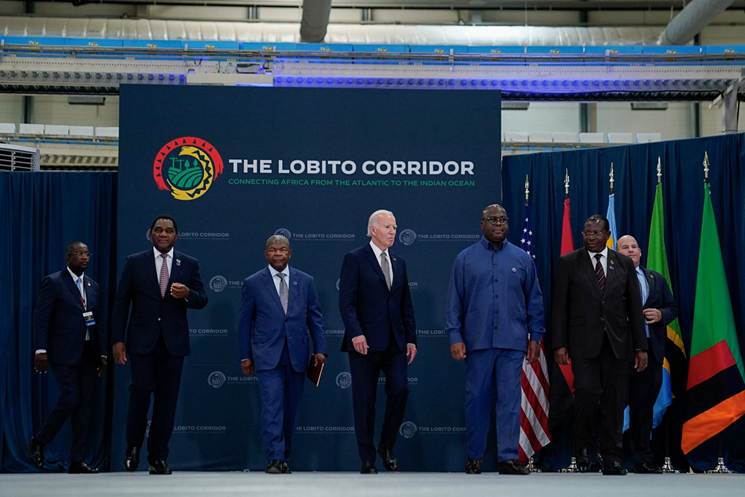
Photo credit: Atlantic Council

Authors: Moses Kulaba, Governance and Economic Policy Centre and Robert Letsatsi, Botswana Watch Organization

This policy brief is a significant resource in understanding the geopolitics at play of critical minerals and support of advocacy surrounding regional collaborative initiatives for critical minerals and the necessary positionings that the region must take to benefit from these initiatives.

Introduction

This short analytical brief provides an overview of the critical mineral wealth in Eastern and Southern Africa with a particular focus on the strategic gains and risks the geopolitical initiatives such as the EU Strategic Minerals Partnerships, the Lobito Corridor and emerging minerals for security deals offer. It is estimated that the mining industry needs to invest $1.7 trillion over the next 15 years to extract and supply enough metals for renewable energy and Africa possess almost half of these.    The brief discusses the geostrategic posture of superpowers such as the US, Europe, Russia and China in the context of the dash for control of critical minerals for the green transition and the current extractive governance challenges facing the region. While strategic alliances may not entirely be a bad idea, the brief highlights the geopolitical, security and perceived neocolonial undertones that may come with these initiatives. And how the historical socio-economic justice concerns of similar geopolitical jostling, security guarantees at the Berlin conference and hinterland to port initiatives contributed to the exploitation of Africa’s resources for benefits elsewhere. The brief further highlights on the possible benefits that the region can garner from these initiatives and measures the region can take so as to avert the risks and maximise benefits from these partnerships.

This policy brief is a significant resource in understanding the geopolitics at play of critical minerals and support of advocacy surrounding regional collaborative initiatives for critical minerals and the necessary positionings that the region must take to benefit from these initiatives.

Background

The surging demand for minerals critical to green transition offers potential economic benefits for mineral rich countries however the dash to secure their supply chain has kicked off geopolitical interests, competition and realignments whose outcomes could have long lasting relationship with divergent unforeseen impacts. With the Eastern and Southern Africa combined as a single economic bloc, the region has the highest concentration of critical green transition minerals such as cobalt, coltan, nickel, graphite, tungsten, tantalum, copper in the world. Yet the history of governance and management of the mineral sector has never yielded very positive dividends for mineral-rich countries in the region. Minerals have fueled conflicts in the DRC and Mozambique, Debt traps in Zambia, political patronage and environmental concerns in Zimbabwe and economic inequalities in South Africa and Botswana.

So far, the EU has signed Critical Minerals Strategic Partnerships with 5 Africa green minerals rich countries and the US led Lobito Mineral Corridor partnership plan to connect the Democratic Republic Congo’s mineral rich Katanga region and Zambia with a railway line to the Angolan Port of Lobito.  Moreover, in recent years we have witnessed the emergence of Minerals for Security deals signed between the US and Ukraine and the US with the DRC and Rwanda.  These developments offer a new geopolitical twist in this global race to secure the critical green transition minerals, pitting the developed western economic superpowers against China in the dash for Africa’s critical mineral resources. Amidst this mineral dash and geopolitical balkanization, it is feared that without strategic positioning, the Eastern and Southern Africa critical minerals rich countries could again miss out from this mineral boom.

Overview of Critical Minerals in Eastern and Southern Africa

Critical Minerals in East Africa

East Africa is vastly endowed with critical minerals with Tanzania having the 5th largest graphite reserves globally (18million tons) and 1.52 million tons of high-grade nickel (URT: Madini). With the DRC combined, the East Africa accounts for more than 50% of Africa’s critical minerals output of graphite, copper, cobalt, coltan and nickel. For instance, the DRC holds the world’s largest cobalt reserves, accounting for about 70% global output and ranks as Africa’s largest and the world’s second-largest copper producer.  The recent discoveries of coltan in Kenya also further adds to the EAC’s critical minerals deposits size.

Despite this potential, EAC as a block has not yet maximized benefits from its mineral wealth.  Member states have been working on competing policies to improve governance, attract ethical investments and increase local beneficiation. The DRC government is working on policies to improve governance, local beneficiation, and attract ethical investment to reduce dependency on Chinese processing yet its neighbors are equally setting mineral refineries to perform the same functions.

Mineral Resources in EAC

CountryPrecious metal, Gemstones & Semi-Precious MetalMetallic MineralsIndustrial minerals
BurundiGoldTin, Nickel, copper, cobalt, niobium, coltan, vanadium, tungstenPhosphate, Peat
KenyaGemstones, goldLead, zircon, iron, titaniumSoda ash, flour spar, salt, mica, chaum, oil, coal, diatomite, gypsum, meers, kaolin, rear earth
RwandaGold, gemstonesTin, tungsten, tantalum, niobium, columbiumpozzolana
TanzaniaGold, diamond, gemstones, silver, PGMsNickel, bauxite, copper, cobalt, uranium, graphiteCoal, phosphate, gypsum, pozzolana, soda ash, gas
UgandaGold, diamondCopper, tin, lead, nickel, cobalt, tungsten, uranium, niobium, tantalum, ironGypsum, kaolin, salt, vermiculite, pozzolana, marble, soapstone, rear earth, oil

Source: EAC Vision 2050 and South Sudan Development Strategy

Critical Minerals in Southern Africa

Southern Africa holds vast deposits of the world’s critical minerals. For example, South Africa holds the largest (90%) reserves of Platinum Group Minerals (PGMs) globally (Critical Minerals and Metals Strategy South Africa 2025). South Africa and Zimbabwe account for 92% of global reserves of PGM and produced 82% of platinum globally in 2022 (UNCTAD: 2023).  Zambia has large Copper deposits accounting for 70% of Africa’s exports while Zimbabwe has the largest lithium reserves globally (estimated at 11 metric tons in Masvingo Province). Lesotho, Botswana, Namibia and Angola have some of the largest deposits of diamond. Angola has been diversifying beyond oil and diamonds, promoting critical minerals exploration and processing. The government is enhancing mining regulations, attracting foreign investment, and seeking strategic partnerships to develop local value chains. As one of the world’s top ten largest copper producers, Zambia is strengthening policies to boost value addition, encourage local smelting and refining, and attract Western investment. Zambia is Africa’s second-largest copper producer after Democratic Republic of Congo and the country is positioning itself as a major supplier in clean energy and EV industries.

From the above data, the Eastern and Southern Africa combined accounts for more than half of the global supply of critical minerals such as copper, coltan, platinum, graphite, manganese, nickel and lithium. In recent years there has been an increasing focus towards critical minerals with global mining exploration budgets for minerals such as lithium, copper and nickel rapidly spiking up since 2022.  This places the East and Southern Africa region at the heart of competing geopolitical interest in race for the control of critical minerals supply chains. In the midst of this rush, the Eastern and Southern Africa region countries have been competing amongst themselves and undercutting each other to attract key large-scale players in the mining sector. This race has both socio-economic, human rights and geopolitical risks and concerns.

What are the key socio-economic justice concerns in the mining sector

The history of mining in the region has not been perfect. Like in previous mining experiences generally, increased extraction of critical minerals raises serious key socio-economic justice concerns like environmental injustice, gross violation of human rights, climate change, community displacement and land grabbing, lack of transparency and accountability, corruption and unequal distribution of benefits. Such concerns have been put in even greater spotlight, where demand for these minerals worldwide began to rise and will surge over the next 20 years in support of the energy transition and technological advancements.

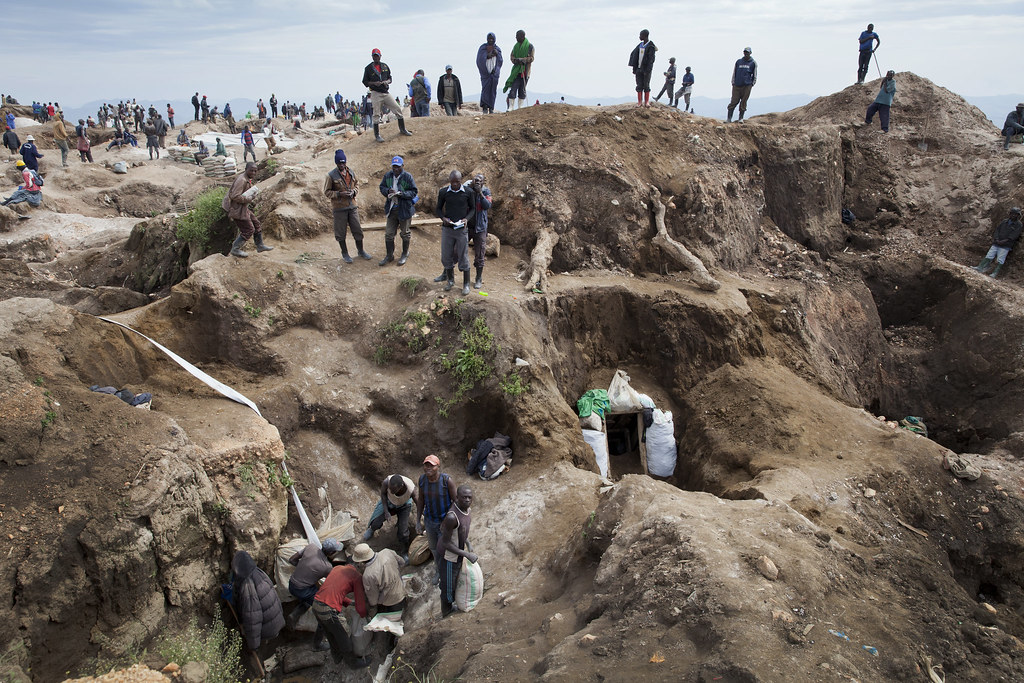
Mining of critical minerals is happening in new land frontiers never explored or exposed to large scale mining before. This contributes to significant environment impacts around villages and communities where they are found. Their effects range from land rights violations via new evictions to destruction of social infrastructures such as schools, hospitals and residential homes due to blasting for minerals (BHRT: 2025). Land degradation, dust pollution and loss of arable agricultural land through clearances for new mines affects health and livelihoods. Processing of minerals such as Lithium and Nickel requires a lot of water and this is contributing to water shortages and pollution of water sources around the mining communities[1].   

Courtesy photo credit: Graphite mining site preparation by Jumbo Graphite Company in , Lindi, Tanzania

Moreover, critical minerals are driving existing and new conflicts in many African countries such as the DRC, Rwanda, Burundi and Mozambique. According to UN reports, the desire to control exploitation of critical minerals are a major driver for the ongoing conflict in DRC[2].

Geopolitics of Critical Minerals

The increasing demand and competition for critical minerals is driving unending geopolitical tensions over which countries can gain access to these resources and how best to manage them. Critical minerals geopolitical competition amongst global economic superpowers; China, US, EU, Russia, United Kingdom and new emerging powers such as Australia, UAE and India have increased in recent years. A raft of strategic partnerships and infrastructure partnerships such as the Lobito corridor have been signed.  Recently, we have witnessed the emergence of ‘Mineral for Security deals’ such as the ones signed between the US- Ukraine and the US- DRC aimed at transferring control of portions of critical mineral supplies in exchange for security guarantees and protection. There are many geopolitical interests and used tools at play but these are the noticeable physical manifestations of this geopolitical competition for critical minerals that is evolving across Africa.

The potential benefits and consequences of these new geopolitical realignments are diverse but alignments and signed deals effectively force smaller and poor countries to surrender sovereignty of their mineral natural resources by attaching their political interest and survival to the supply of critical minerals to the stronger states or regional economic power centers.

Moreover, there has been a surge in the use of counter friendshoring measures by importing countries establishing direct partnerships with exporting countries for raw critical minerals. While this may be viewed as a positive development for minerals and commodities trade, the tilted partnerships reinforce the underdevelopment of the downstream supply chain capacity for critical minerals, especially as developed countries secure the Just Energy Transition (JET) technologies. And are not willing yet to transfer this technology to the minerals source countries. The complex dynamics and intricate geopolitical forces surrounding critical minerals therefore demands a comprehensive and forward-thinking strategy to effectively navigate the evolving global landscape[3]. Without this, the risk of securing little benefits from the critical mineral wealth for Eastern and Southern Africa is real.

The EU Strategic Minerals Partnerships and implications on Africa’s critical Minerals

Amid global geopolitical tensions, the EU has been ramping up efforts to diversify its mineral value chains. The EU has forged strategic partnerships with critical minerals resource-rich African nations like Tanzania, Namibia, DRC, Zambia and Rwanda. To date the EU has established partnerships for critical raw materials with at least 14 countries [4]. These nitty-gritties of these partnerships are widely known to the public and citizens of the mineral rich countries but the EU states they are designed to secure access to critical minerals at various stages of the value chain, strengthen European industrial resilience and accelerate the green transition of its economies while supporting Africa’s own industrialization ambitions. The EU has further established a multistakeholder partnership with the US to develop the Lobito corridor project[5]. While these partnerships are considered vital in ensuring improved mineral governance and securing investment inflows into Africa’s mining sector, on the flipside they are viewed controversially as a strategic path for the EU’s footstep into the Critical Minerals arena and its continued dominance by tightly tying Africa as a source of raw critical materials to feed Europe’s industrial base.

According to the EU, the strategic partnerships will involve cooperation on supply chain integration, infrastructure financing, research and innovation, capacity building, and sustainable sourcing of minerals. The EU strategic minerals partnerships therefore have a prospect of placing Africa as a global player in the critical minerals space and potentially securing Africa’s positive contribution towards a net zero future.

Africa does not have an establish strong industrial base to consume all its critical minerals wealth and therefore foreign investment and partnerships like these is important. With strategic leverage and tactful negotiation, Africa can potentially wean itself off the largely exploitative contracts previously signed with mining companies that were economically biased, had disregard for human rights and responsible sourcing. Without tearing the existing contracts apart, Africa can establish a new progressive framework to guide its mining.

However, the EU mineral partnerships are viewed as inherently biased and pursued with less consideration of transparency, socio-economic and environmental considerations. The terms of these partnerships are not widely known to the public and citizens where they are signed. The EU has not been keen and proactive in promoting the contents of these partnerships . By pursuing this silent approach, the EU risks falling into the widely criticized opaque foreign policy relations trajectory taken by other players such as China.

According to SOMO, the EU strategic partnerships are perceived as not good for addressing climate change and net zero. Despite the green tint, the EU is focused on the minerals and less on the effects. Europe is ultimately pursuing a resource-intensive growth strategy to bolster its industries in profiting from low-emission technologies. This prioritization of growth neglects that affluent countries’ overconsumption of resources is the root cause of climate change and the major driver of biodiversity loss, pollution, and waste. Worse, the unfavorable trade regimes [secured under the partnerships] can prevent poor resource-rich countries from climbing up the global value chains[6].

For the EU strategic partnerships to be beneficial and widely supported, they have to be structured differently if compared to other Critical Minerals Resource deals which are considered lopsided, exploitative and largely promoting the hinterland to port resource extractive infrastructural legacy. The EU critical minerals partnerships will have to, as a must, adhere to principles of transparency, equity, promote creation of value, reduction of human and environmental rights and conflicts in the countries and communities where these minerals are exploited.

The Lobito Corridor Initiative and its implications

The Lobito Corridor is a 1 300 km rail and infrastructure project stretching from the Angolan port of Lobito to mining regions of Kolwezi in the Democratic Republic of the Congo (DRC) and Zambia. Financed by the US and its EU allies, the project provides an alternative route to transport minerals such as cobalt and copper, helping to diversify mineral supply chains in the region. According to the US Department for Finance Corporation (DFC), the Lobito corridor initiative is not just any traditional development aid project but a strategic initiative aimed at strengthening critical mineral supply chains by countering China’s dominance[7]

Justification for the Lobito Corridor Project

According to the US Department for Finance Corporation (DFC) the Lobito Corridor project is poised to spur trade, industrialization, and regional integration across Southern Africa. The advanced technologies required for the industries of the future depend on reliable access to copper and cobalt. These minerals are essential for batteries, wind farms, electric vehicles, as well as energy transmission and distribution.

But critical mineral supply chains are threatened by Chinese dominance. Companies based in China own or operate as much as 80 percent of the critical mineral production in the Democratic Republic of the Congo (DRC), much of which is sent to China for processing. And China is pushing new projects to further secure its dominance, adding to the estimated $1 trillion it has spent on its global infrastructure initiative known as its Belt and Road Initiative, or BRI. 

Additionally, many of the world’s most mineral-rich countries such as the DRC lack the infrastructure to transport growing volumes of these materials to major coastal ports where they can be exported to markets around the world. DRC is the second-largest global producer of copper, and the largest producer of cobalt with a 70 percent global market share[8].

Key gains from Lobito Corridor Initiative

Offers an opportunity of revitalizing defunct infrastructure in a region severely affected by war. A railway built more than 100 years ago connecting mining sites in the DRC to the Lobito port in Angola was largely destroyed during the Angolan civil war. A reconstructed railway suffered from poor construction and upkeep. As a result, these critical minerals are currently transported by heavy-duty trucks to ports in South Africa and Tanzania over roads that can take months to travel. Growing demand for critical minerals threatens to exacerbate the problem. Analysts predict that cobalt demand will exceed the pace of production before the end of 2024 and thereby justifying the construction of new infrastructure projects such as the Lobito Corridor project[9].

The Lobito corridor project provides an opportunity for opening up new investments into the region.  According to the initial plans the US Finance Cooperation would provide a $553 million loan to the Lobito Atlantic Railway to finance the upgrade and rehabilitation of more than 800 miles (1,300 km) of the rail connecting the city of Luau on the border of the DRC to the port city of Lobito in Angola, as well as the upgrade and rehabilitation of the mineral port in Lobito.

The investment is intended to improve the cost-effectiveness, speed, and resilience of global supply chains by upgrading and rehabilitating the railway in Angola that increases the efficiency and reliability of transportation out of the DRC’s mines. And it ensures China will not secure a monopoly on critical minerals access and transit routes in this key region.  

Over the last decade, China had subsidized new construction and upgrades to rail systems in the region, including in Angola, DFC’s neighbor to the west and home to several key coastal transportation hubs, such as the Port of Lobito and the Benguela Railway that extends eastward from it into the DRC. Chinese companies and China-linked entities have worked to control regional transportation systems and restrict access to U.S. and allied businesses, creating challenges to investments in markets like the DRC. However, those projects have suffered from what The Wall Street Journal described as “poor construction and upkeep,” leading to “rundown stations, malfunctioning safety systems offline servers and frequent derailments on the train line.”

According to the US, the DFC’s investment will diversify away from Chinese-controlled economic corridors. It will reinforce railway tracks and bridges along the route and add containers, trains, and equipment such as mobile cranes and forklifts. These investments are expected to increase Lobito’s transportation capacity from 0.4 million metric tons per year as of the end of 2024 to 4.6 million metric tons. It will also benefit the local economy, where minerals make up 90 percent of the DRC’s total exports, accounting for 40 percent of its GDP and $30 billion in value as of last year.

Lobito and projects like will bolster trade access in and around Angola. The coordination led by DFC—which is poised to expand to new projects— presents a boom for U.S. industries, with Angolan organizations already looking to source equipment from the United States for mining, storage, and other integral elements of the project. 

More broadly, the Lobito project strengthens Angola’s role as a key security and economic partner of the United States and as a leader in Sub-Saharan Africa working to resolve issues—including those that affect American interests such as the peace process in eastern DRC. Angolan President João Lourenço also recently assumed the role of chairman of the African Union, and the Lobito project is considered as a potential lever for influencing positions and securing other strategic projects across Africa.  

Graphic highlighting 30% reduction in shipping cost and 29-day reduction in shipping time as a result of DFC’s investment in the Lobito Atlantic Railway
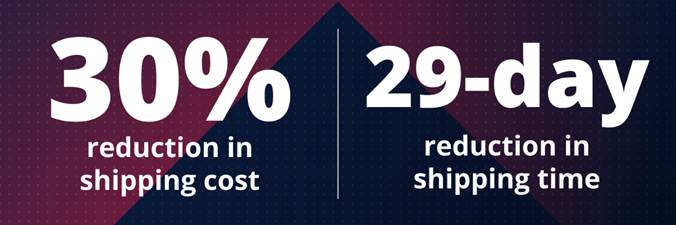
Source: US International Finance Corporation

According to the DFC, within Angola, the project will upgrade critical infrastructure to international standards and will ensure that access to rail remains open to all paying customers. It is expected to generate significant local income there, with total local procurement of goods and services expected to reach more than $350 million within the first five years.  

And it is expected to create more than 1,000 new full-time jobs for Angolans, growing the existing workforce from 434 to more than 1,500. Other support projects will benefit from the investments in the Lobito Corridor.   For example, a $10 million loan from DFC to Seba Foods Zambia Ltd. is designed to support the expansion of its food production and storage capacity for maize-based, soya-based, and other nutritious and affordable consumer food products, strengthening the food value chain in Zambia, which is on the eastern end of the Lobito Corridor. Seba Foods was the first U.S. Government-financed food security and agribusiness-focused investment following the announcement of the vision for the Lobito Corridor. 

The Lobito Corridor initiative exemplifies the competition, with the US and EU aligning efforts to establish stronger supply chains. China, already investing heavily, aims to enhance its Belt and Road Initiative along the corridor. The US has indicated that China can still utilize the railway for its exports. The US-China cooperation on this project may create new avenues for sustainable development in Africa. If the two superpowers align their Lobito strategies, it could accelerate Africa’s green industrialization. Jointly-driven investments would align with Africa’s broader economic growth and sustainable development goals. Africa’s potential for growth will attract both powers, as both seek competitive positions within the Lobito Corridor. China has already recently signed a $1 billion deal to restore the TAZARA railway[10].

Key concerns of the Lobito Corridor Initiative

The Lobito Corridor project exemplifies the geopolitical interests to serve the US and EU interests rather than Africa (Zambia Angola & DRC’s) interests. As clearly stated by the US and the EU, the Lobito corridor initiative is intended to strategically increase the US and EU’s dominance and security of access to Africa’s critical minerals supply chains and diversifying Africa away from Chinese-controlled economic corridors. This project is therefore largely driven by external interests and Africa finds itself in the middle of these competing geopolitical interests.

The project exacerbates the colonial hinterland to port extractive infrastructure, designed with a major purpose of extracting and transporting Africa’s resources as raw materials from the hinterland to the port ready for export to benefit elsewhere. The Lobito initiative railway project has no interconnection with other transport nodes to facilitate in country mobility and connectivity to other economic sectors. It is therefore designed with an exploitative lens driven with an ‘extract and take away’ mindset, with less beneficial considerations to the broader national public concerns. Financing of arteries linking the railway to other transport infrastructures would address significant infrastructure problems affecting millions of people across the countries in the corridor. For example, an East-West railway connection could link Lobito and TAZARA routes, creating Africa’s first transcontinental railway. Such a corridor could bridge the Atlantic and Indian ocean[11].

The project will be financed with loans acquired from the US and EU, whose payment will be recouped from revenues from the operations and sale of the critical minerals. This is ironical as the lenders will be the major beneficiaries from the mineral export. The long-term net effect or benefit from these may be negligible as the debt burden for the corridor countries (Angola, DRC and Zambia) will increase and they may be forced to pay using their minerals resources.

The strategic partnerships and Lobito corridor project have no plans to invest in critical minerals value addition with in the participating countries. As a consequence, the project may consolidate Africa’s exclusion from the critical minerals global value chain, locking Africa to lower tier of the value chain as a supplier of critical raw materials.   Current studies and evidence show that Africa integration in the Global Value Chain is largely through forward linkages whereby it primarily provides unprocessed raw materials to feed the industrial development and economic prosperity elsewhere.

For example , the United States Geological Survey (USGS) and UNCTAD data shows that the DRC and Zambia refine only about 7% and 3.5% of all the copper produced, which is far much lower than their share in the global production.[12] In recent years China has emerged as the leading processor of critical minerals (Lithium, Copper, Nickel & Cobalt) implying that Africa’s minerals are exported raw, processed and re-exported back to Africa as intermediary or finished goods.

Moreover, the Lobito corridor does not promote intra Africa trade in minerals and therefore runs contrary to Africa’s mineral and economic development ambitions as articulated in the various propositions of the Africa Unions Agenda 2063 and the Africa Mining Vision particularly in regards to regional cooperation and beneficiation. The USGS report for 2023 shows that African Minerals are largely traded with countries outside Africa. For instance, the DRC accounts for 77% of Africa’s cobalt exports, however, its intra Africa links are few. This suggests its trade is largely more with countries outside the continent. Several countries with insignificant cobalt reserves and production re-export more beneficiated cobalt through regional networks as indicated in the table below, reaping bigger economic benefits from added value. 

Table showing Africa Major Critical Minerals Export Destination, Intra Africa Trade and Linkages

Africa Critical MineralTop Five Global Export DestinationsAfrica trading partnersIntra Africa trade shareImplication
CobaltChina (72%), Belgium (2%), Malaysia (2%), Switzerland (2%)Zambia, Namibia, Morocco, Congo, Madagascar, South Africa, DR Congo, Mali, Tanzania, Mozambique, Uganda, and Kenya.South Africa (1%), DRC (89% to Zambia, Namibia and Morocco), Congo (4.4%), Zambia (3.5%)The top five global destinations consume 80% of Africa’s cobalt   More of DRC’s cobalt is re-exported by other countries.
GraphiteChina (28%), Germany (15%), India (9%), USA (7%) and Malaysia (7%)Nigeria, South Africa, Swaziland, Niger, Guinea, Tanzania, Madagascar, Zimbabwe, Ethiopia, Sudan, Namibia, Tunisia, Morocco, Senegal, Mozambique, Cameroon, Egypt, 30 Algeria, Côte d’Ivoire, Kenya, Mauritius, Ghana, Botswana, Libya, Sierra Leone, Equatorial Guinea, and Mali.South Africa (51%), Tanzania (14%), Seychelle (12%), Kenya & Morocco (3%).The top five global destinations account for 64% of Africa’s Graphite export   These countries export to fewer African countries. Tanzania only has eight intra-Africa graphite export links (Angola, South Africa, Mozambique, Zambia, DR Congo, Burundi, Comoros and Madagascar, while Seychelles has one (South Africa)
LithiumFrance (7%), USA (5%), Russia (1%) Germany & China (2%)36 African CountriesDRC (77%), South Africa (15%), Morocco (1%), Tanzania (1%)The top five consume 15% of Africa total lithium exports from at 36 countries   DRC has the lowest intra exports links to Africa while South Africa, Kenya and Morrocco lead in number of intra Africa export links.
ManaganeseChina (58%), India (10%), Norway (5%), Japan (4%), and Russia (3%)31 African CountriesMorocco (42%), Zambia (11%), South Africa (20%), Ghana (1%)These countries account for about 80% of Africa’s Manganese exports outside Africa.   Morocco, South Africa, and Zambia (in consecutive order) emerge as countries with the highest intra-Africa export shares for Manganese.   South Africa and Kenya have the highest intra-Africa export links.
Platinum Group of Metals (PGM)United Kingdom accounting for about 28%, Japan 17%, Belgium about 15%, United States of America 12% and Germany 9%.45 CountriesZimbabwe (86%), Ghana and DRC (3%),These countries account for about 89% of Africa’s PGM export outside the region   South Africa has the highest intra-Africa export links to thirteen countries, followed by Swaziland and Malawi

In the long run, the Lobito corridor project will potentially weaken further existing limited intra Africa linkages and collaborative projects by setting up or creating an unfavorable competition for already existing infrastructure such as the Tanzania-Zambia Railway (TAZARA) and the Ports of Dar es Salaam, Beira in Mozambique and Durban, which have recently received major uplifts with costly loans from China and other global financial institutions such as the World Bank.

The Lobito Corridor project excludes itself from other major problems facing mining in the region, including addressing previous economic injustices and human rights related issues, the long-term effects of war and climate change. Because of the fear of being edged out by China, the Lobito corridor project does not come with stringent requirements and expectation for adherence to high human rights standards by the partner countries.

Mineral for Security Deals and implications on Africa’s critical minerals.

Amidst the ongoing geopolitical interest for critical minerals, recently we have witnessed the emergence of Minerals for Security Guarantee deals as a tool for control of access to critical minerals supply chains. On 30th April 2025 the US signed a Minerals for security deal with Ukraine and in June, the US signed a similar Mineral for Security deal with the DRC and Rwanda. The deals provide access to critical minerals in return for security guarantees from the US. Although the deals have been covered with a peace and conflict resolution imperative, they are perceived as essentially aimed at securing the US’s access to critical minerals. In multiple speeches, President Trump has been categorical that these deals must secure critical minerals for the US and thereby amplifying the nexus between geopolitics, Africa’s critical minerals and conflicts.

According to Global witness, the deals like the extraction and trade of some critical minerals intensify new geopolitical tensions, reinforcing long-standing patterns of exploitation[13] including conflicts. For instance the Trump-Ukraine deal revealed a connection of critical minerals to the Russia and Ukraine war and how critical mineral natural resources in Ukraine have become a key bargaining chip in international diplomacy between the US and Russia.

In fact, the government of the Democratic Republic of Congo reached out to the Donald Trump administration with a Ukrainian-style proposal in February 2025 in response to the rapid advance of the M23 rebel group in the east of the country. At stake are the mineral riches of North and South Kivu provinces, a major but highly problematic source of metals such as tin, tungsten and coltan[14].

According to different sources, this deal was presented as a pacification tool for eastern DRC as it could stop the advance of belligerent forces in the region but equally boost Rwanda’s processing of Congo minerals while providing the US with an assured source of processed critical minerals required to support its industrial technology and security needs.

The full contents of deal are not readily available to the public but leaked versions mentioned requirements for withdrawal of Rwandan Forces from the Eastern DRC and integration of the M23 belligerent factions into the DRC’s forces.

Researchers and analysists argue that the mineral deals essentially consolidate a firm grip of the US on access to DRC’s critical minerals, closing off competition against other potential rival countries such as China and Russia, there by exacerbating grounds for economic injustice, opacity, lack of transparency and potential for unfair mining deals, biased in favour of the security guarantors.

Mineral deals are tainted with opacity, designed with a biased exploitative and a neocolonial mindset aimed at rewarding the dominant superpower and the aggressor against the victim. They are negotiated behind closed doors and their full terms are not availed neither to the public nor the citizens of the mineral rich country.

According to Kambale Musavuli of the Centre for Research on Congo-Kinshasa, the US brokered deal between the DRC and Rwanda is wild. The US is getting access to $2 trillion of worth of DRC minerals in exchange for forcing the withdrawal of M23 militias. That is one tenth of the DRC’s total mineral wealth, more than any single foreign country claims. This is strange because analysts of the region have long argued that the US effectively enabled foreign support for the M23 in order to destabilise the DRC, prevent a functional state from arising and achieving sovereignty over its mineral wealth, and thus ensure minerals stay cheaply available for US firms. If this analysis is correct then the US acquired $2 trillion mineral rights in exchange for stopping a conflict that it has effectively supported. Consider also how media discourse is playing out. Remember that in 2008 Chinese firms signed a deal with the DRC to obtain $9billion in minerals in exchange for infrastructure development. Western media went wild with narratives of “Chinese colonisation”. Now the US has secured minerals deal 200x larger and the media narrative is all about how the US brings “peace”

The mining security deals were negotiated in secrecy led by political elites and diplomats. As such citizens are disempowered from having a say in the future management of a vital sector, whose benefits are signed off to another country by a few, dashing hopes for citizens stake into a better future.

The minimum threshold of minerals signed off in the form of US mining companies investing in the critical minerals sector is not clear and whether the DRC has any stake at what percentage in the minerals extracted by the US companies is largely unknown.

Natural resource policies have a contagion effect. The deals potentially open up a can of worms for future similar deals, covering natural resources such as forestry, wild life management and critical infrastructure such as ports, airports, water ways and food supply chains.

Moreover, the deals may not be a permanent solution to ongoing conflicts. The mineral for security deals largely covers security guarantees against ‘external aggression’ and may not be fitted for dealing with internal political and socio-economic drivers for conflict such as historical injustices, land and citizenship rights, regional economic imbalances, bad governance and banditry. Local insurgent rebel groups and militias may continue to pursue their political and economic ends outside the ambits of the security deal. For example, on the very day that the US-DRC and Rwanda deal was signed, one of the rebel groups, Codeco militia attacked and killed at least 10 people at a displaced people’s camp in Ituri province.  There are more than 100 rebel groups in Eastern DRC. The M23 which was largely mentioned in the US deal has already described it as a tiny part’ of a solution to the conflict.

Further, the security guarantees provided under the deal are not clear. It is not clear what these mean and when and how such guarantees can be deployed. For instance, does security guarantee mean supply of arms or armed mercenaries, military intervention or alliances with US soldiers fighting alongside or against the aggressor. Moreover, it is not clear whether the US can be directly involved in fighting internal rebel groups and insurgents without triggering nationalistic and constitutional challenges, driving internal political conflicts further.

By nature, deals of this nature are long term and cannot easily be breached without consequences. The terms and consequences for such breach are less known to the public. The conditions for termination or renegotiation are equally not known.  Therefore, the mineral security agreement essentially locks countries towards dealing with one major economic superpower whose primary interest is access to the country’s critical mineral wealth.

Conclusion

The EU strategic partnerships, the mineral security guarantee deals and the Lobito project may entirely not be a bad idea, however their implicit risks cast shadows about their potential in advancing Africa’s critical minerals and economic development goals. The key concerns around these strategic mineral alliances and the Lobito Corrido are embedded within the broader critical development discourse and concerns about decolonization and recolonization, sovereignty, security and resource nationalism, state capture, perpetration of socio-economic injustices by dominant global capital and Africa’s wealth transfer. Specific concerns include risks for increasing mineral bad governance and economic injustices and vulnerabilities, geopolitical tension, and the need to pursue sustainable mining practices.

With these strategic partnerships, mineral for security deals and the Lobito railway in place, these critical rich countries are locked into long-term commitments to ensure the supply of metals. The major question constantly paused is how can Africa relate as an equal partner with other powers in the race for critical minerals without surrendering its critical minerals wealth to the full benefit of others elsewhere. Moreover, over dependence on certain countries can pose risks when such countries face political instability or become embroiled in geopolitical disputes drawing in Africa’s mineral rich countries in their midst. For these alliances to be mutually beneficial, they must ensure that the resources are accessed equitably, that benefits are fairly distributed, and that environmental impacts are kept to a minimum for their sustainability in the long run .

Recommendations
  1. The strategic partnerships must go beyond critical minerals exploitation but venture into addressing broader social economic development concerns of the people in the mineral rich countries.
  2. The Lobito Corridor initiative must avoid the ‘hinterland to port’ colonial legacy by establishing railway transport interconnection nodes to other existing railway infrastructure so as to improve connectivity across the project countries to ease the bigger infrastructure challenges that these countries face.
  3. The strategic partnership and Lobito Corridor must encourage value addition by investing in processing and exporting of value-added products, so as to generate wealth at source.
  4. Africa Mineral rich countries must explore and establish south to south partnerships, thereby increasing their leverage and power to negotiate with external partners and mining companies
  5. The EU strategic partnerships and the Lobito Corridor project must not exacerbate the role of minerals as drivers of conflict by supporting and buying minerals from conflict zones.
  6. Moreover, these alliances must ensure that the resources are accessed equitably, that benefits are fairly distributed, and that environmental impacts are kept to a minimum for their sustainability in the long run.
  7. The Minerals for security deals must be transparent and not biased exclusively in favour of the dominant economic super power.
  8. The Minerals for Security deals must avoid advancing human rights abuses by US mining companies under the US government protection
  9.  The strategic partnerships, security deals and their associated projects must promote national dialogues and citizens participation in governance of critical minerals and mitigation of harm from mining
Selected References

Andreoni et al., (2023) Critical Minerals and routes to diversification in Africa: Linkages, pulling dynamics and Opportunities in medium-high tech supply chains; Backup paper commissioned by the UNCTAD Secretariate for the 2023 edition of the Economic Development in Africa Reports

Andy Home, After Ukraine deal, US turns its critical minerals gaze to Africa, available at https://www.reuters.com/markets/, accessed on May 22
EITI; Using Transparence Benefits EU Mineral Partnerships; Accessed via https://eiti.org/blog-post/using-transparency-benefit-eus-mineral-partnerships

Global Witness; Critical Minerals Fuel Conflicts available via  https://globalwitness.org/en/campaigns/transition-minerals/the-critical-minerals-scramble-how-the-race-for-resources-is-fuelling-conflict-and-inequality/#:~:text=How%20are%20critical%20minerals%20driving,communities%20in%20resource%2Drich%20nations. Accessed on 15 May 2025

IMPACT, Actors Must Suspend Sourcing Minerals Financing Armed Groups in Democratic Republic of Congo, available at https://impacttransform.org/, accessed on May 23, 1:46pm

Railway Supply ; (2024) US-China Lobito Corridor Investments Drive Africa’s Economic and Sustainable Growth;  https://www.railway.supply/en/us-china-lobito-corridor-investments-drive-africas-economic-and-sustainable-growth/

Somo; The EU Critical Minerals Crusade (2024) ; accessed via: https://www.somo.nl/the-eus-critical-minerals-crusade/

US International Finance Cooperation https://www.dfc.gov/investment-story/strengthening-critical-mineral-supply-chains-countering-chinas-dominance#:~:text=But%20critical%20mineral%20supply%20chains,sent%20to%20China%20for%20processing.

URT: Madini accessed via: https://www.madini.go.tz/page/e8a4201d-286f-4409-9db0-719311652336/

[1] https://www.gov.za/sites/default/files/gcis_document/202505/critical-minerals-and-metals-strategy-south-africa-2025.pdf


[1] Emerging Human Rights Implications of Transition Minerals Extraction and processing: Case Studies from Democratic Republic of Congo, Mozambique and Zimbabwe

[2] IMPACT, Actors Must Suspend Sourcing Minerals Financing Armed Groups in Democratic Republic of Congo, available at https://impacttransform.org/, accessed on May 23, 1:46pm

[3] ibid

[4] https://eiti.org/blog-post/using-transparency-benefit-eus-mineral-partnerships

[5] https://ecfr.eu/event/critical-minerals-and-eu-africa-strategic-partnerships-where-do-we-stand/

[6] https://www.somo.nl/the-eus-critical-minerals-crusade/

[7] US International Finance Cooperation https://www.dfc.gov/investment-story/strengthening-critical-mineral-supply-chains-countering-chinas-dominance#:~:text=But%20critical%20mineral%20supply%20chains,sent%20to%20China%20for%20processing.

[8] ibid

[9] ibid

[10] https://www.railway.supply/en/us-china-lobito-corridor-investments-drive-africas-economic-and-sustainable-growth/

[11] https://www.railway.supply/en/us-china-lobito-corridor-investments-drive-africas-economic-and-sustainable-growth/

[12] Andreoni et al., (2023) Critical Minerals and routes to diversification in Africa: Linkages, pulling dynamics and Opportunities in medium-high tech supply chains; Backup paper commissioned by the UNCTAD Secretariate for the 2023 edition of the Economic Development in Africa Reports

[13] Global Witness; Critical Minerals Fuel Conflicts available via  https://globalwitness.org/en/campaigns/transition-minerals/the-critical-minerals-scramble-how-the-race-for-resources-is-fuelling-conflict-and-inequality/#:~:text=How%20are%20critical%20minerals%20driving,communities%20in%20resource%2Drich%20nations. Accessed on 15 May 2025

[14] Andy Home, After Ukraine deal, US turns its critical minerals gaze to Africa, available at https://www.reuters.com/markets/, accessed on May 22
Unlocking Non-Tariff Barriers (NTBs) in Regional Agricultural Trade in East Africa: An Analysis of Sanitary and Phytosanitary (SPS) Regime for Horticultural Products in Tanzania and Its Effects on International Trade.

Generally, Non-Trade Measures (NTMs) are good for safe and ethical international trade; however, when poorly regulated and applied irregularly, they transform into Non-Tariff Barrier (NTBs) and can be harmful to trade. Our short analytical study shows that Tanzania is both a perpetrator and victim of irregular SPS measures and could be losing billions in international trade and revenue foregone from its horticultural sector

By Jacob Mokiwa, Researcher , Governance and Economic Policy Centre

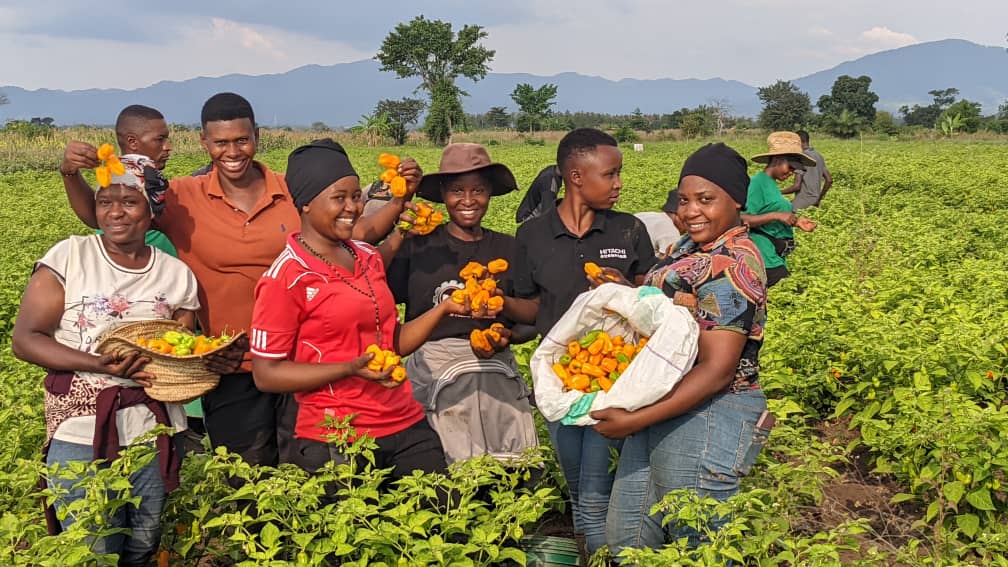
(Featured  top image, Courtesy of UNDP-Tanzania, Kizimba Project, Itete Ifakara Youth) 

Sanitary and Phytosanitary measures (SPS) are standards and regulations put in place as Non-Tariff Measures (NTMs) to ensure the safety and quality of food, as well as to protect humans, animals, and plants from risks associated with diseases, pests, and contaminants based on science. SPS decisions are supposed to be science based. These measures are integrated into Tanzania’s regulatory framework, including through legislation, policies, and adherence to international agreements like the WTO SPS Agreement and the International Plant Protection Convention (IPPC) IPPC.

Also, the normative framework governing East African Community (EAC) SPS measures include but are not limited to Article 108 (c) of the EAC Treaty; Article 38 (1C) of the Customs Union Protocol, EAC SPS Protocol, SPS Information Sharing Platform, etc.).

This short policy brief analyzes Tanzania’s Sanitary and Phytosanitary (SPS) regime for horticultural products, assessing their impact on international trade and concludes with recommendations for enhancing SPS policy measures to ensure safety, compliance and a facilitative smooth international trade in Tanzania horticultural products. It emanates from our economic governance work on regional economic cooperation, trade and investment, with multiple aims of creating awareness about SPS as a major regulatory tool in regional and international trade that small traders and aspiring international horticulture exporters must know.

State of Horticultural Products

Faraha Salim sells vegetables in the market in Lushoto thanks to a small loan from a community savings and lending group-VICOBA.

Tanzania is a largely an agricultural producing and exporting country with its horticulture sector becoming a rapidly expanding sector with a huge potential to contribute to Tanzania’s economy through employment, trade and export foreign income earning. The country has large chunks of arable land, water bodies and favorable climate for horticulture in many regions across the country.

Tanzania’s horticultural sector encompasses various products, including fruits, vegetables, flowers, and spices.

In recent years, Tanzania has registered impressive export performance of different horticultural products, and this presents an advantageous opportunity to the smallholder farmers to increase their production. Despite this huge potential, the horticultural sector still suffers multiple challenges, including financing, regulation and export standardization. 

The local market infrastructure  conditions are still poor. The cold storage chain for horticultural products from the gardens to the market is limited. Horticulture products are transported in hot trucks, sold in open markets damaging quality  and export standards. The net effect is that Tanzania’s export share of the regional and global horticultural trade has been growing but remains low, compared to its neighbors such as Kenya. According to Ministry of Agriculture statistics, the horticulture sector has become the second largest growth driver of the entire agricultural sector, after food crops contributing about 25% of the sector but has remained stagnant in  growth at 11% annually.

According to the Tanzania Horticultural Association (TAHA) and the BoT Monthly Economic Review (MER), for the year ending in December 2023, the value of horticultural crops’ exports grew to $417.7 million (Sh1.044 trillion) as compared to $290.1 million (Sh725.25 billion) recorded in 2022. This shows that exports grew by $127.6 million (Sh319 billion), which is equivalent to 43.9 percent. The growth in exports comes after a decline from $384.9 million (962.25 billion) reported in 2021 to $290.1 million (Sh725.25 billion) in 2022. The decline accounted for a total of $94 million (Sh237 billion), which is equal to 24.4 percent[1].

This data if extrapolated for the last five years indicates that the Horticultural sector can be a major game changer in Tanzania’s international trade exports, serving as a major source employment to the bludgeoning unemployed youthful population of foreign revenue through increased investment in horticulture and export trade.  Moreover, the sector can leap frog Tanzania to a regional competitor, outpacing its neighbors and rivals in the horticultural sector.

However, the limited awareness, selective and uncoordinated application of SPS standards by both export and importing partners in intra-regional and international trade has gradually turned them from being Non-Tariff Measures (NTM) to become Non-Tariff Barriers (NTBs) to trade in Horticultural products amongst others.

According to Land O Lakes Trade of Agriculture Safely & Efficiency (TRASE) report, the East African Community (EAC) represents one of the fastest growing regional economic communities in the world. And yet, trade of agricultural products from and within this region has been hindered by Sanitary and Phytosanitary (SPS) issues 

SPS Measures Regime in Tanzania

Tanzania’s SPS regime consists of several legal frameworks articulated and differentiated under the three SPS functions of animal health, food safety and plant health. This involves the Plant Health Act, 2020 with the mandate of issuing phytosanitary certificates, among other functions, Standards Act No. 2 of 2009 with the mandate of regulating and developing mandatory standards and responsible for inspection and certification). 

The regulatory institutions include the Ministry of Agriculture and Livestock, Ministry of Trade and Industry, Tanzania Pesticides and Plant Health Authority (TPPHA) established under the Act No. 04 of 2020 with a mandate to comply with the requirements of International Plant Protection Convection (IPPC) on sanitary and phytosanitary measures[2].  The other regulatory institution is the Tanzania Bureau of Standards (TBS) established under Act No. 3 of 1975 as the National Standards Institute and subsequently renamed Tanzania Bureau of Standards under Act No. 1 of 1977. On 20th March 2009, the Standards Act No. 3 of 1975 was repealed and replaced by the Standards Act No. 2 of 2009.

The Bureau was established as part of the efforts by the government to strengthen the supporting institutional infrastructure for the industry and commerce sectors of the economy. Specifically, TBS is mandated to undertake measures for quality control of products of all descriptions and to promote standardization in industry and commerce[3]. So far, the regime has been quite robust, enabling Tanzania to enforce its SPS measures, however faces multiple challenges that would benefit from improvement.

Challenges

The agricultural sector already faces multiple challenges but the SPS regime in Tanzania adds another layer of complexity, potentially hindering Tanzania’s ability to invest in the horticultural sector, produce, export and compete effectively in the global market. For instance, some stringent SPS requirements cannot be met by small farmers in Tanzania due to the limited resources required for modern agriculture and consequently hinder the export of horticultural products, as meeting the standards can be costly.

Additionally, inconsistent enforcement of SPS regulations across different institutions and regions within Tanzania creates confusion and delays in trade processes and hence affects the competitiveness of Tanzanian products in international markets.

Furthermore, procedural framework for SPS regulation has shortcomings in the institutional framework and that, as a result, application of the existing legislations is impaired. There is limited capacity for speedy and quality testing and certification facilities. This lead to bottlenecks in the export process, delaying shipments and increasing costs for exporters.

Other challenges are; limited funding to attract and retain high quality talent, lack of transparency in certification, duplication of regulatory functions, poor coordination among the various SPS control agencies, lack of mutual confidence between enforcement agencies in different countries and non-existence of arrangements and mutual recognition agreements signed to facilitate trade.

Impact on regional and International Trade

 The effectiveness of Tanzania’s SPS regime significantly influences its international trade in horticultural products and therefore, there is a need to balance regulatory practices for health protection with trade facilitation. However, if not addressed, the regime may, and for purposes of enforcement of SPS controls, create trade constraints such as;

  • Market Access Restrictions: Non-compliance with SPS measures restricts access to lucrative international markets that is with stringent regulations, the production costs for horticultural producers may increase and making Tanzanian products less competitive compared to those from other countries. Kenya, Tanzania’s immediate horticultural competitor has been successful in meeting the standards at lower costs and thereby dominating the regional and international market of horticultural products.
  • Loss of Revenue: Inability to meet SPS standard leads to rejected shipments, financial losses, and diminished competitiveness in global markets, affecting the revenue generated from horticultural exports and thus undermines economic growth potential in the horticultural sector.
  • Diminished Reputation: Persistent challenges in meeting SPS standards tarnish Tanzania’s reputation as a reliable supplier of safe and high-quality horticultural products, thereby reducing consumer confidence and market demand.
  • Market Diversification: Strict regulatory requirements may incentivize Tanzanian exporters to explore new markets where compliance costs are lower or where there is greater alignment between domestic and international standards.
  • Quality Perception: Adherence to rigorous quality and safety standards can enhance the perception of Tanzanian horticultural products in international markets, positioning them as premium offerings valued for their quality and reliability. This could open up opportunities for niche markets and premium pricing strategies.

Policy Recommendations

Addressing challenges in Tanzania’s SPS regime for horticultural products is crucial for unlocking the sector’s full export potential, facilitating more investment and fostering sustainable economic growth. By implementing the recommendations outlined in this brief below, Tanzania can overcome SPS-related barriers to international trade and position itself in the global horticultural market as a reliable supplier of high-quality horticultural products and maximize the benefits of international trade for the citizens and economy. The following recommendations are proposed:

  1. Improve coordination among regulatory agencies and investing in digital platforms for documentation and compliance verification to simplify and accelerate SPS certification procedures for horticultural products and this will cut costs, reduce trade barriers and enhance market access.
  2. Strengthen enforcement mechanisms by putting in place an enabling legal framework to create effective and expeditious administrative mechanisms and provide clear administrative redress mechanisms for handling trade complaints and disputes. Also, the framework should provide for coordination of the various SPS control agencies to avoid overlaps and duplication. The current regime lays a solid foundation for further improvement.
  1. Improve infrastructure by allocating resources for upgrading SPS-related infrastructure including laboratories, inspection facilities and cold chain logistics that will enable producers and exporters to meet international standards and capitalize on emerging market opportunities. Tanzania has a deficit of cold storage capacity and its location along the equator exposes horticultural products to heat waves and vulnerability rapid quality deterioration and waste.
  1. Recruit and retain high quality staff with the of international testing and certification requirements. This must also be followed by addressing administrative limitations and sealing off opportunities for corruption.
  1. Prioritize capacity building, awareness and improve dissemination of information on SPS particularly for producers, small-scale traders, exporters and raising initiatives for regulatory agencies, on legislation and regulations, processes, procedures, standards, best practices, and technological advancements to enhance competitiveness in global markets.
  1. Foster partnership between public and private sector stakeholders to develop and implement SPS-related programs, training, research & development, technology adoption and technical assistance so as to address common challenges and promote innovation in the horticultural value chain. This must be backed by scaled up SPS technical assistance, going beyond the implementing institutions but also extended to horticultural farmers.
  1. Advocate for harmonization of SPS standards with international norms and regional trade agreements to streamline trade procedures and facilitate market access for Tanzanian horticultural products. Horticulture farmers and exporters still complain of disharmony in application and enforcement between Tanzania and its trading partners such as the Tanzania-South Africa Avocado case in 2021[4].
  1. Establish and empower the National SPS Committee to address and resolve technical SPS issues faced by traders and increase transparency on SPS requirements. Moreover, the committee should also be the main source of information on new SPS regulations, including measures introduced by trading partners.
  1. Constantly review to ascertain the extent to which Tanzania’s SPS regime is aligned to the EAC SPS protocol and its application is consistent and facilitative of international trade. There are cases of selective application and enforcement even among EAC member states.

References

Ministry of Agriculture. (2022). “National Horticulture Development Strategy.” Retrieved from Online:    https://www.kilimo.go.tz/uploads/books/Mkakati_wa_Kuendeleza_Horticulture.pdf

Tanzania Bureau of Standards (TBS). (2022). “Sanitary and Phytosanitary Measures for Horticultural Products: Regulations and Compliance Guidelines.” Retrieved from Online: https://www.tbs.go.tz/uploads/files/LIST%20OF%20COMPULSORY%20TANZANIA%20STANDARD%20AS%20OF%20JULY%20%202022.pdf

Trade of Agriculture Safely and Efficiently in East Africa (TRASE) (2021). “Assessment of SPS Legal/Regulatory Frameworks in the EAC Partner States”. Retrieved from Online: https://storcpdkenticomedia.blob.core.windows.net/media/idd/media/lolorg/publications/assessment-of-sps-legal-systems-in-eac-partner-states-4th-june-2021.pdf

Trade of Agriculture Safely and Efficiently in East Africa (TRASE) (2021). “Assessment of SPS Systems in the EAC Partner States”. Retrieved from Online:  https://storcpdkenticomedia.blob.core.windows.net/media/idd/media/lolorg/publications/assessment-of-sps-systems-in-eac-partner-states-18th-march-2021-print-file-4th-june-2021.pdf

TradeMark East Africa: (2021). Standards, Quality Infrastructure, and SPS Programme: Project Brief: Retrieved from Online: https://www.trademarkafrica.com/project/standards-quality-infrastructure-and-sps-programme/

Food and Agriculture Organization of the United Nations (FAO). (2021). “Good Practices for Strengthening National Plant Protection Organizations.” Retrieved from Online: https://www.fao.org/3/i6677e/i6677e.pdf

 [1] https://www.thecitizen.co.tz/tanzania/magazines/what-44-percent-rise-in-horticulture-exports-means-to-tanzania-4510004

[2] https://www.tphpa.go.tz/

[3] https://www.tbs.go.tz/pages/historical-background

[4] https://www.theeastafrican.co.ke/tea/business/tanzanian-avocado-exports-poised-to-grace-sa-tables-3506248

Political Risk and Investment in EA: An Expose of violent tax protests and political risk on Trade and Investment in East Africa

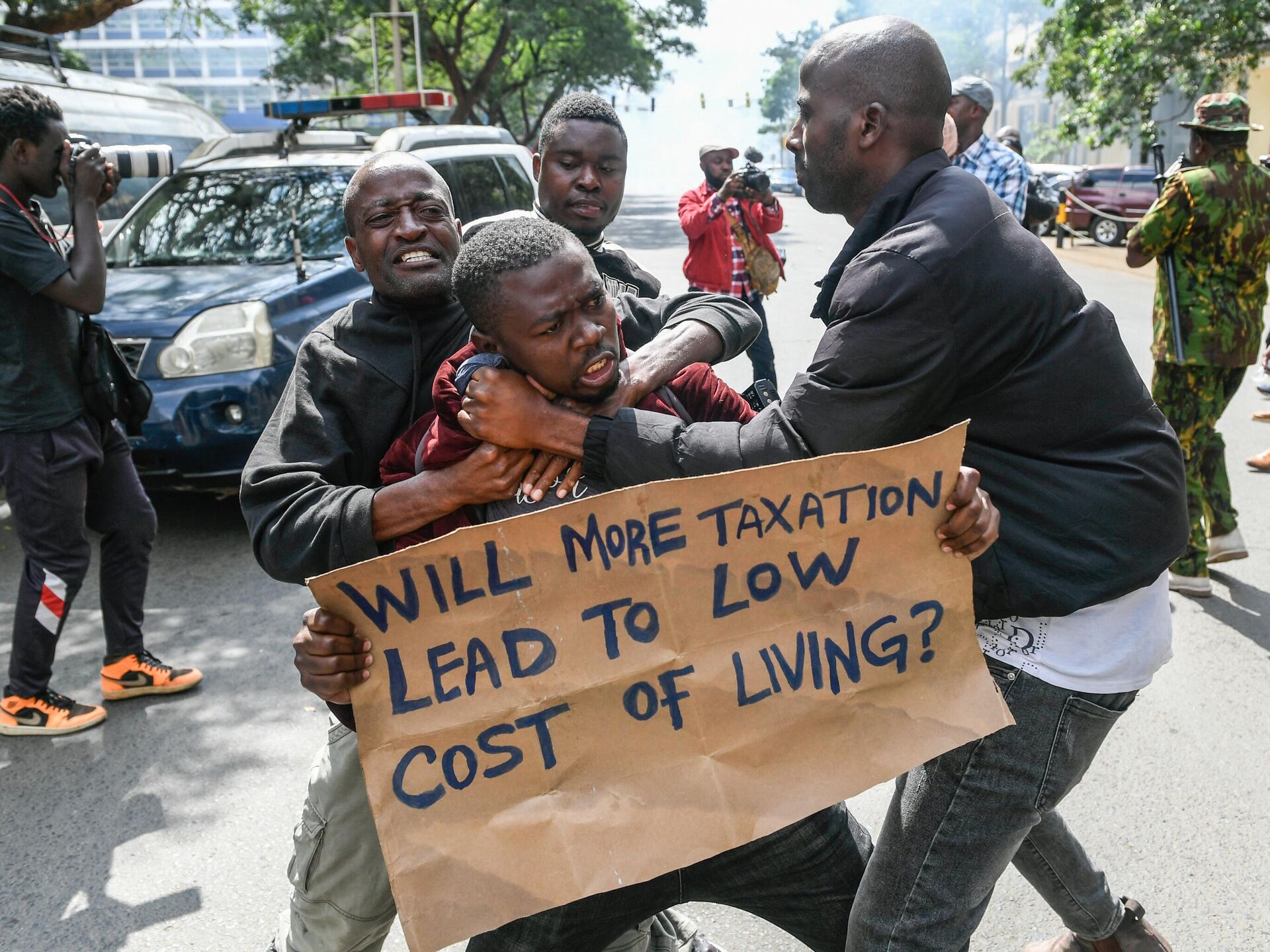
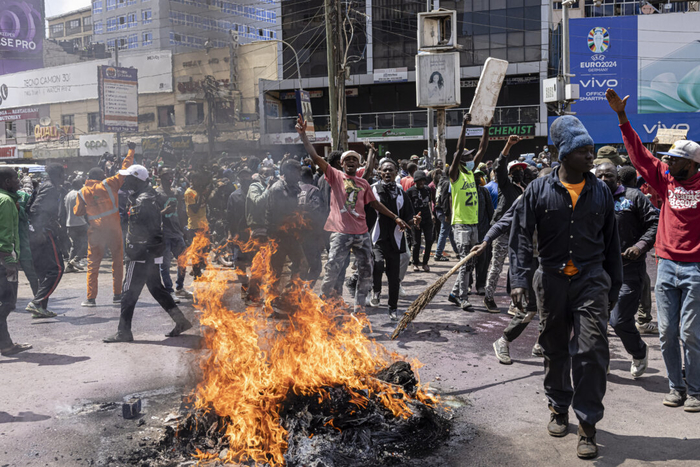
In our previous brief on Tax and Fiscal governance in East Africa, we observed that with dwindling foreign aid, it appears the governments in East Africa have resorted to squeezing everywhere to raise some dime.  We cautioned that Taxation may be good however, when the extremes are beyond reasonableness, governments are bound to break their break the back of the economies they aspire to build[1]. The recent and ongoing tax protests that have rocked the East African regions, with violence and vandalism spiraling out of control in Kenya, clearly underscore this point. A failed tax administration and an irate society.

By Moses Kulaba, Governance and Economic Policy Centre

@taxjustice @politicalrisk

Freedom of expression, the right to picket and demonstrate and resist punitive taxation has been established over the years.  The doctrine of no taxation without proper representation was long established by the Romans, Greeks and Americans during the famous Boston Tea Party 1773) and American war of independence, The French Revolution and the English, paving way into the famous Magna Carta.

This was further advanced by Adam Smith in his legendary Canons of Taxation asserting that generally, a good tax system must be underlined by proportionality and ability to pay[2] and political scientist Harold D Laswell’s tax law of who pays, what and when, and each individual or group should “pay their fair share. These principles that tax liability should be based on the taxpayer’s ability to pay is accepted in most countries as one of the bases of a socially just tax system and generally citizens are duty bound to reject a system that is regarded as unfair and disproportionally beyond their means[3].

However, when peaceful protests and demonstrations strategically drift towards violence, vandalism and murder like the ones we saw in Kenya, then these effectively transform into high level political risks to trade and investment.

According to multiple sources a political risk is a type of risk faced by investors, corporations, and governments that political decisions, events, or conditions will significantly affect the profitability of a business actor or the expected value of a given economic action. In simple terms, a political risk is the possibility that your business could suffer because of instability or political changes in a country: conflicts and unrest, changes in regime or government, changes in international policies or relations between countries, as well as changes that occur in a country’s policies, business laws or investment regulations[4]. Examples of political risks include; unilateral state decisions, war, terrorism, and civil unrest

By their nature, these risks are expensive to be insured against and constitute a major determinant factor for business in deciding where to invest or do business. Highly political risk countries experience sharp declines in investment and may attract low new trade and investments flows.

According to Trade and Investment experts such as Pierre Lamourelle, Deputy Global Head of Specialty Credit within Allianz Trade for Multinationals, the interconnected nature of the global economy makes it very possible that a political risk in one country may affect many businesses across the globe.

“What has changed in the 25 years since I started in this business is that we are living in a more connected world today,” says Pierre. On the upside, that means business is easier to conduct on a global scale. Almost everybody now has the ability to reach out to emerging countries or to conclude a contract and secure a sale in a foreign country.

On the downside, this means that when something goes wrong in one part of the world, you can feel the impact halfway around the globe – directly, if you are dealing with the country in question, or indirectly because of your diverse supply chain. Remember when the 20,000-ton container ship “Ever Given” got stuck in the Suez Canal in March 2021, shutting down international trade for a week?

In today’s increasingly interconnected world, “just-in-time” supply chains, global internet connection, and smartphones give SMEs the ability to conduct business in a global arena. This means the possibility for great opportunities, but also that every business is just steps away from political risk.

Persistent violent tax protests can make it difficult and unpredictable for the government to raise enough tax revenue to finance its obligations, including servicing of sovereign commitments such as paying off its debts and makes the economic environment very unpredictable. This can lead  global economic and financial institutions to flag or down grade the Country’s economic status as risky , making difficult and more expensive for the country and companies to raise external capital for investment.

Moreover, the violent protests occurred or are happening at a critical period of the year when East African Countries such as Kenya record the highest number of tourist arrivals into the Country for the summer holiday. Before the protests, national parks, hotels and beaches in Kenya’s tourist hot spots had already recorded high tourist bookings and were expecting a bumper harvest this season as the global economies and travelers rebound from the COVID 19 lock down.  Reports from multiple travel agents and hoteliers already indicate that most tourists have either cancelled or postponed their decisions to travel to Kenya and East Africa generally. Indeed, some already in the Country were gripped with fear of uncertainty and have left.

The burning image of an old plane at Uhuru Park did not send a good image either as most people around the world, unfamiliar with Kenya, thought Jomo Kenyatta International Airport was attacked and planes on the tarmac set on fire.  A recorded video clip that trended on social media of passengers crammed up at JKIA with a voice note indicating that many were fleeing the country added salt to the pinch suggesting Kenya was not safe anymore!

Similarly, travel advisories have been issued to foreigners in country and intending to travel to Kenya, to do that if it is essential and be vigilant of their security as safety during this violent period cannot be guaranteed. With all these at play, Kenya may remain a blacklisted destination among some foreign tourists for some period to come, denying the country the much-needed foreign revenue and jobs in its service sector. At least a number of high conferences that were planned for Nairobi were cancelled.

The net effects of the demonstrations therefore go beyond having the bill rejected but have long-term economic effects on Kenya’s economy. The violent Gen-Z’s may have to reconsider their approach to avoid a full economic meltdown.

Of course, there are legitimate concerns that some current established large business and investments were already not providing benefits to the young people. Multiple reports have shown that some businesses were tax dodgers while others belong to the politically connected who used their political connections to shove deals and amassing wealth on the backbone of the majority Kenyans. Moreover, given the current loopholes in the governance systems, new trade and investment opportunities would not support or create many new economic opportunities either.

However, when these arguments are advanced, it is also imperative to look at the broader picture of the net effect that violent protests can have on Kenya’s economy and future that the Gen-Z seeks to address. Kenya’s economy is extensively connected and dependent on the global economy with most global business having chosen Nairobi as a regional financial hub.  Violent demonstrations and disruption of such a magnitude can have significant long-term impacts.

With a government under siege and  constrained with a debt tinkering on the margins of default and  unrelenting rancorous youth roaming and burning the streets of Nairobi armed with negative social media, Kenya’s economy could slide into a free fall and recession, whose impacts on everyone could be far reaching.

Taxation and a strong tax system may contribute to improved governance through 3 maximum channels. Taxation establishes a fiscal social contract between citizens and the taxing state. Tax payers have a legitimate cause to expect something in return for paying taxes and are more likely to hold their governments to account. Governments have a stronger incentive to promote economic growth when they are dependent on fair taxes.

In this regard, we suggest the following;

  1. Resistance demonstrations and protests for tax rights must be expressed with limitations and restraint from both sides- The state and citizens alike
  1. Government must be rational when imposing taxes. Tax policies must be clear and predictable.  Clearly, imposing taxes on bread and blanket exemption of choppers is a sign missed priorities.
  1. Government communication apparatus must be robust enough to explain to the citizens the justifications for taxation and the political class must lead by example demonstrating frugality in public expenditure.
  1. There must be distinction between private, public and national critical infrastructure, whose destruction may or can affect Kenya’s national security interest and state existence. Lest we forget, Kenya has been a victim of terrorism and still faces extensive threats from both internal and external elements, whose interests to harm Kenya has never wavered. Attacks on its critical infrastructure exposes the Country and Kenyans further to major threats.
  1. Re-engineering of Kenya’s governance and economy to address the contemporary needs for the Gen-Z. Times have changed and the Gen-Z who now constitute an overwhelming majority will effectively from 2027 be forever a major determinant of East Africa’s political future. Women will no longer be a game changer in electoral politics and outcomes but the Gen-Z will be.
  1. There is need for both political and social sobriety. East Africa needs good leadership and peace!

[1] Tax and Fiscal Governance: Is VAT milking the broken tax cow dry? An analysis of tax trends and impacts on EAC small traders, with a case of the recent traders’ demonstrations and boycotts in Uganda:

[2] Adam Smith, in his book, The Wealth of Nations, 1776

[3] Schronharl, K,  etal; Histories of Tax Evasion , Avoidance and Resistance; https://library.oapen.org/bitstream/id/346cfc5f-6001-40e3-8a3b-fe46405df8c2/9781000823882.pdf

[4] https://www.allianz-trade.com/en_US/insights/what-is-political-risk.html#:~:text=Political%20risk%20is%20the%20possibility,country’s%20policies%2C%20business%20laws%20or

Digital Currencies and Future Monetary Policy in EA: How Governments can address the downside of cryptocurrency to advance financial inclusion in East Africa

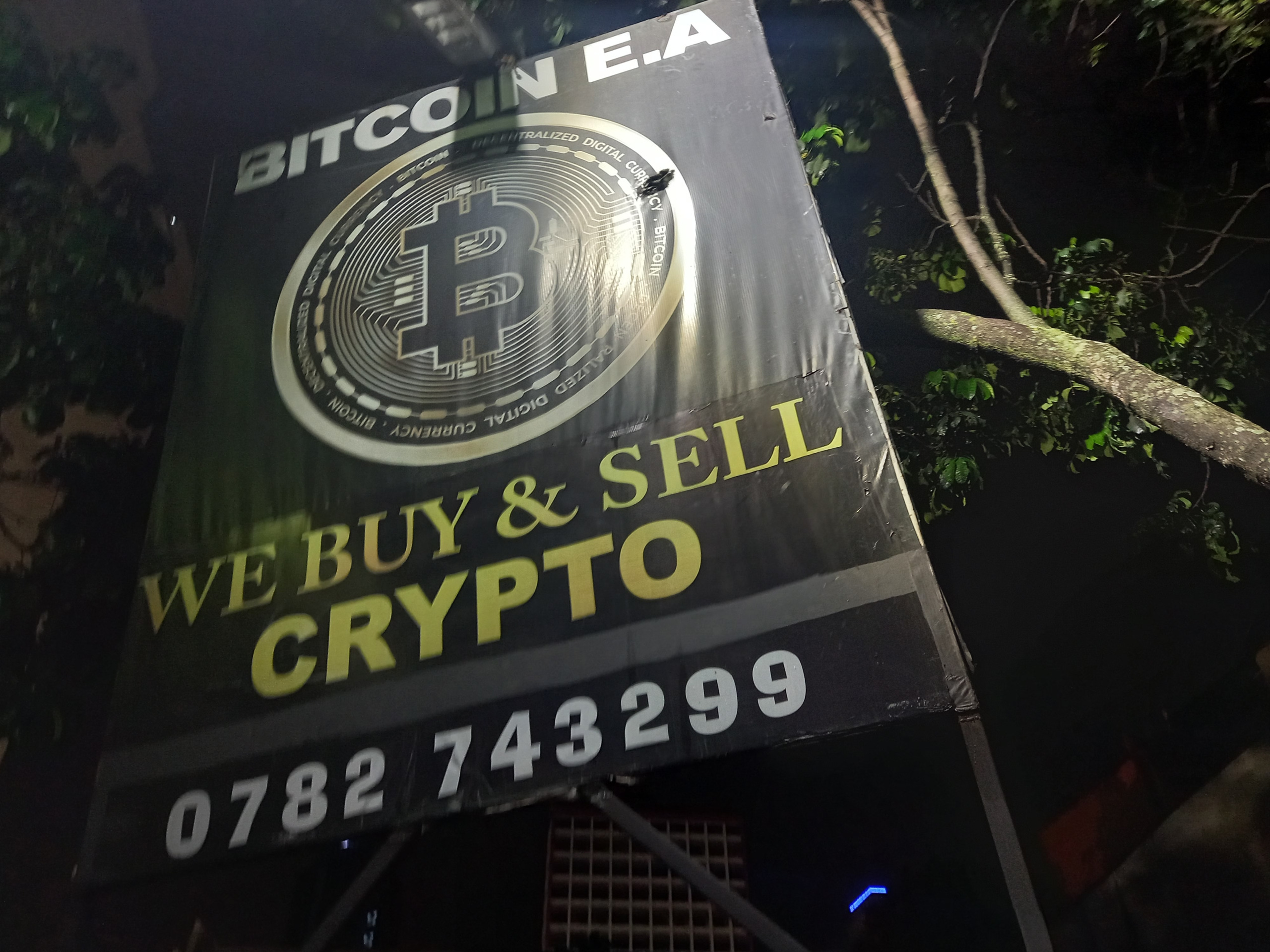
In discussing the merits and de-merits of cryptocurrency reminds us of the simple high school definition of money. Money is what money does. In other words, anything that is widely acceptable as medium of exchange can become money. Most cryptoprenuers in East Africa just want regulation.

By Moses Kulaba, Governance and Economic Policy Centre

@mkulaba2000 @cryptocurrency @monetary blog @teamMonetary

In our first policy brief we explored and untangled the socio-economic and macro-economic risks associated with Crypto currencies. We concluded that the skepticisms and scrutiny of crypto currency is well deserved but noted that the underlying technology behind it could be used to drive future monetary policy and financial inclusion. In this second part of our digital economic governance and monetary policy analytical series, we explore how governments can or may navigate around these latent risks to formalize and make cryptocurrencies safe and vehicle towards inclusive digital and financial economies. We suggest that regulation is required instead of total bans which are difficult to enforce and could be denying governments potential dividends.

Evolution of Money, currency and monetary policy in East Africa

In discussing the merits and de-merits of cryptocurrency reminds us of the simple high school definition of money. Money is what money does. In other words, anything that is widely acceptable as medium of exchange can become money. In monetary history, the definition and nature of money has always evolved based on the trust and what it can do.  The emergency of crypto currencies in the 21st century perhaps unleashes yet another moment in history when money and monetary policy will be redefined for the future.

Just some few decades ago, the cowrie shell was the recognized legal tender and medium of exchange and trade along the East African coast. Europeans, Arabs and Portuguese used cowries as currency to control the valuable African trade routes and markets, along the coastline and its interior

Between 13th to the 20th century, Europeans, Arab traders and their African collaborators used Cowrie shells to buy services and precious goods such as salt, ivory, iron and gold and human beings as slaves. There are no records to show that minting machines existed and it is likely that these cowrie shells were perhaps picked along the coastline of the Indian oceans as these merchants landed to transact their business.  Clearly, the cowrie shells were not regulated by any central bank or backed up with any valuable item such as gold, as we know today yet they continued to be a means of exchange and facilitated commerce in East Africa for more than 1000 years!

Potential dividends from blockchain and crypto currencies

There are many downsides to cryptocurrencies and the experience has so far not been good always but behind any technological innovation there could be some opportunity.

According to technology experts some of the rapidly evolving technology behind crypto, however, may ultimately hold greater promise. A new kind of multilateral platform driven by blockchain and crypto could improve cross-border payments, leveraging technological innovations for public policy objectives.  

According to Forbes, the advantages of cryptocurrencies include cheaper and faster money transfers and decentralized systems that do not collapse at a single point of failure. Investors just need a computer or a smartphone with an internet connection to use cryptocurrency. There’s no identification verification, credit check, or background to open a cryptocurrency wallet. It is way faster and easier compared to old financial institutions. It also allows individuals to effortlessly make internet transactions or send funds to someone.[1]

With these advances, new payment technologies including tokenization, encryption, and programmability could define the future of monetary policy and public financial transactions.

Moreover, the private sector keeps innovating and customizing financial services. The public sector too just needs to match this pace by leveraging this available technology to upgrade its payment infrastructure and ensure interoperability, safety, and efficiency in digital finance.  

Just a few years ago, the mobile money transfer and payment system-MPESA was none existent.  When it was introduced by Safaricom, there was skepticism on the use of MPESA as money transfer and payment platform in Kenya and in East Africa yet over the last 20 years the MPESA mobile payment system has become the biggest financial technological innovation of the 21st century.

Today, MPESA is the largest mobile money platform, transacting billions of shillings per day and reaching millions of people across the continent.  The system has been expanded to other service sectors such as health, education and food.  They key takeaway from this technological breakthrough is that financial evolution is a continuous process and the concept of money will evolve for many years to come.

Is the imperative for crypto and a new monetary policy inevitable?

According to Amb Prof Ndemo Bitange[2], a renowned economist and Kenya’s Ambassador to Belgium & EU, contrary to the beliefs of sceptics, the penetration of crypto, development and adoption of Central Bank Digital Currencies (CBDCs) is an inevitable shift already underway.

This transformation is driven by changing business models and the increasing preference for alternative modes of payment over traditional cash. Reports from the Bank for International Settlements (BIS) affirm this trend and shed light on the ongoing efforts to shape the future of monetary policy and finance.

A CBDC is a digital or virtual form of a country fiat currency (such as USD, EUR and TZS) issued and regulated by a central bank. Their value is based on the government’s ability to maintain its value by controlling supply and demand, are used as a medium of exchange in transactions, and are considered legal tender within their respective countries.

Therefore, when issued, CBDC becomes a legal tender, analogous to physical notes and coins. Based on the literature, CBDC is thought to offer a range of benefits to the economy.

Central banks from various countries, including Canada, the European Union, Japan, Switzerland, England, Sweden, the Board of Governors of the Federal Reserve, and the Bank for International Settlements, play a crucial role in developing the foundational principles and core feature of CBDCs.

These institutions have conducted extensive research and produced valuable reports on key aspects of CBDC implementation. They acknowledge that the evolution of money is inevitable given the increasing digitalization of economies, rapidly changing user needs and the transformative impact of innovation on financial services.

Furthermore, the use of cash for transactions is declining in many jurisdictions, while non-bank private sector entities are introducing new forms of digital money, such as stablecoins. These developments highlight the need for central banks to adapt and explore how they can fulfil their public policy objectives in a rapidly changing financial landscape.

Prof Ndemo cautions however cautions that while preparations for CBDCs are underway in the global north, discussions and plans for adopting digital currencies in the south are still frozen. This disparity could lead to capacity issues and challenges for countries in the south as they try to catch up with the rest of the world during CBDC adoption.

Trends towards crypto regulation and future monetary policy in EAC

Regulation and regularization of cryptocurrencies in East Africa has been a basket of mixed goods, ranging from caution, total bans to a move towards regulation and potential new monetary policy covering digital currencies.

Tanzania currently does not have specific regulations or legislation governing digital currencies. The use of cryptocurrencies is still relatively banned, and the only accepted legal tender is the Tanzanian Shillings.

However, in January 2023, the Bank of Tanzania adopted a phased, cautious and risk-based approach to adoption of CBDCs, [3] setting in motion a potential road towards a new monetary policy terrain in the country.

This followed among others recognition despite the restrictions, mining and transacting in crypto currencies was popular widely used amongst many youths in Tanzania. The Bank of Tanzania had been researching and exploring potentiality of issuance of its CBDC. At this research stage, the Bank of Tanzania had formed a multidisciplinary technical team to examine practical aspects of CBDC and building capacity to the team in various ways.

The key considerations during this research stage involved choosing a suitable approach to CBDC adoption based on Tanzania context. This included type of CBDC to be issued (wholesale, retail or both), models for issuance and management (direct, indirect, or hybrid), form of CBDC (token-based or account-based), instrument design (remunerated or non-remunerated) and degree of anonymity or traceability.

 A particular attention was paid on risks and controls associated with issuance, distribution, counterfeit and usage of currencies. The outcome of the research at this point revealed that more than 100 countries in the world are at different stages of the CBDC adoption journey with 88 at research, 20 proof of concept, 13 pilot and 3 at launch. Analysis of these findings indicate that majority of central bankers across the world had taken a cautionary approach in the CBDC implementation roadmap, in order to avoid any potential risks that can disrupt financial stability of their economies.

Further, it was observed that, 6 countries had cancelled their CBDC adoption mainly due to structural and technological challenges in the implementation phase. The structural challenges included dominance of cash in making transactions and existence of inefficient payment systems, high implementation cost and risk of disrupting existing ecosystem.

Accordingly, to the government, the Bank of Tanzania would continue to monitor, research and collaborate with stakeholders, including other central banks, in the efforts to arrive at a suitable and appropriate use and technology for issuance of Tanzanian shillings in digital form.

Tanzania’s announcement was a pioneering move in a region whose governments have remained both non-committal but largely hostile in equal measures towards digital currencies.

In Kenya, cryptocurrency is technically legal, with no specific laws or regulations prohibiting its use or possession. However, it is not recognized as legal tender or an asset. The Central Bank of Kenya has issued warnings without specified penalties and has expressly forbidden financial institutions and payment service providers from doing business with Web3 businesses that ‘trade cryptocurrencies.’ Existing regulations are not well-communicated, and a clear legal framework is lacking.

Despite the warnings, transacting in crypto thrives and there is appetite amongst young people and online investors. Media reports suggest that overall, there are an estimated 2.7 million to 4 million cryptocurrency owners in Kenya, representing approximately 5% to 9% of the country’s populations.

On Umoja Lab’s BRAF (Blockchain Regulatory Assessment Framework), Kenya is rated a 40.63 out of 100, indicating that it is a “Developing Regulatory Environment” that is becoming clearer on where blockchain technology and cryptocurrency should go with regards to the need for regulation and expected compliance measures for crypto companies.

In 2023, the government found difficulties in prosecuting the directors of an online cryptocurrency company called One Coin. OneCoin company was accused of transacting illegally millions of Kenya shillings and duping Kenyans with a pay of Ksh7000 in exchange for their eye iris scan and biodata.

The company promised participants, among others, opportunities for making a fortune thereafter in crypto assets, a promise that never was. According to the Central Bank of Kenya, Onecoin was never registered to operate in Kenya yet it registered thousands and transacted millions without detection. 

Its co-founder, Karl Sebastian Green Wood also known as the ‘Cryptoqueen,” was arrested and sentenced to 20 years in prison for his orchestration of the massive OneCoin fraud scheme in the US and globally. Her co-founder Ruja Imatova disappeared since 2017 and it is not clear whether she is dead or alive. The Kenyan Onecoin case is not fully settled yet, bringing to light the importance of proper regulation.

Kenya Case law as cited by Justice M.W Mungai under the case of Wiseman Talent Ventures vs. Capital Markets Authority of Kenya (2019) has placed regulation of crypto currencies by the Capital Markets Authority under the ambits of  Section 2 & 11 of Capital Markets Act

Uganda does not recognize crypto-currency as a legal tender and in October 2019 the Minister of Finance, Planning and Economic Development issued a public statement to that effect.

However, in recent years there has been increasing calls from stakeholders for the country to regulate digital currencies. According to a USAID funded research by the Collaboration on International ICT Policy for East and Southern Africa (CIPESA), as technology continues to reposition itself around societal needs, at a fast pace, more countries around the globe are embracing and creating avenues for the use of cryptocurrencies within their local environments. Uganda should not be caught at the tail end of this drive and neither should it wait out the process of strategically positioning itself in the electronic commerce domain[4].

While back in 2011, Cyber-related legislation was passed to cater for the emerging digital landscape in Uganda. This failed to cater for crypto-currencies, despite recognizing a huge volume of online financial transactions.

CSO demand for clarity on the government position on use of cryptocurrencies; and suggests that Uganda should work with regional and international partners on establishment of an international treaty, as well as international collaborative measures in addressing cryptocurrencies.

In Rwanda, the government has banned banks from facilitating crypto transactions, however many locals are hopeful that Rwanda’s crypto scene will blossom on the back of a digitalizing economy.

Despite the bans, many young Rwandese are still cracking the webs to mine the crypto dimes and the appeal for regulation instead of criminalization and total ban is equally on.

Generally, we are yet to see some shifts towards regulation or regularization of cryptocurrencies in the other East Africa countries such the DRC and Somalia. Both policy and regulation are still blurred, exposing many to the risks but equally government missing out on the potential dividends that come with crypto and block chain-based technologies. It is for this reasons that a new monetary policy and regulation is required across the EAC.

Key policy recommendations to address cryptocurrency risks and future monetary policy

# Governments through Ministries of Finance and Central Banks must map existing crypto platforms and extent of penetration.  Kenya and Tanzania are so far reported as having the largest number of crypto entrepreneurs and transaction volumes in East Africa. These statistics are however not official. Like in Uganda and Rwanda, governments are yet to determine the detailed extent of penetration and impact in the form of self-employed jobs.

# Governments must assess the potential economic contributions to the economy in the form of financial inclusion, employment and facilitation of investment. Nigeria was the first to launch the e-naira but so far, no concrete assessment has been done to establish its success and why it failed. Government let studies on the potential economic benefits from crypto are non-publicly existent.

# Set up clear regulation (Policy and legislative)-To avoid ambiguities, fraud, money laundering for criminal enterprise, tax evasion and disruption of the formal financial systems. In our (Governance and Economic Policy Centre) interviews with crypto entrepreneurs, genuine traders who transact legitimate business exist, and just want to be regulated not banned.  The IMF and other institutions can offer support to EAC governments on building secure platforms while governments build their capacities to regulate and monitor transactions.

# Institutionalization of CBDC trading and clearing houses for crypto currencies. Tanzania may have taken a positive stride; however, this has to be followed with other supportive infrastructure such as a policy ambit and platforms for trading and exchange. A concomitant supportive monetary policy can go a long way in addressing some of the challenges and lacunas currently faced by both government and digital currency entrepreneurs.

# Explore, scaleup and leverage the opportunities that blockchain and crypto technology can offer in other sectors such as health, education and governance. In Kenya, it was reported that blockchain technology was used to secure the 2022 general elections voting and election results systems.

As global reports show, the penetration of cryptocurrency continues to take shape and without regulation the risks and exposure to the criminal abuse could increase. It is imperative that the public and private sectors work together to ensure that users can transact safely, and that criminals can’t abuse these new assets. So far the regulatory framework exists that can be used as a basis towards a new monetary policy and proper regulation and regularization.

With surging unemployment rates and a bulging tech-savy and connected youth population, online financial trading in digital currencies could increase financial inclusion, cause a digital economic revolution and penetration in the EAC countries, producing dividends in the form of jobs, employment and incomes. That is why future monetary policy must be aligned to the current and future technology and currency trends.


[1] https://www.forbes.com/advisor/in/investing/cryptocurrency/advantages-of-cryptocurrency/

[2]  Amb Prof Ndemo Bitange; Exploring the future of banking with CBDCs,  a blog post on his personal Linkedin page, July 15, 2023


[3] https://www.bot.go.tz/Adverts/PressRelease/en/2023011413181519.pdf

[4] https://cipesa.org/wp-content/files/briefs/Crypto_Currency_Regulation_and_Implications_on_CSOs_in_Uganda_Policy_Brief.pdf

Disruptive digital economies and Monetary Policy: Re-Exploring Blockchain , Crypto Currency and monetary policy in East Africa-Are governments running late?

 The pressure to digitalize our economies and adopt a new generation of monetary policies may be legitimate but the risks are also real. How can governments navigate this delicate balance between digital economy penetration, financial inclusion and monetary policy? Can governments in East Africa continue riding behind the tide?

By Moses Kulaba, Governance and Economic Policy Centre

@digitaleconomies @cryptocurrencies @financial inclusion @mkulaba2000

Globally, there is a debate and desire for the adoption of blockchain technology and cryptocurrency as medium for financial transactions yet in East Africa, government uptake and regulation are moving at a snail’s pace. In this first of a two-part series of our short analytical economic policy and governance policy briefings, we re-explore and unpack the future of blockchain and crypto currency penetration and the risk considerations shaping debate and monetary policy terrain in East Africa. We will later discuss how the EAC governments can leverage monetary policy and regulation to harness the dividends of blockchain and cryptocurrencies to advance financial inclusion in the region.

Generally, there is limited understanding of blockchain and crypto currency technology. The debate on the risks that these new digital currencies portend to the public and national economies is ongoing. So far there is no consensus amongst citizens, economic policy makers and central banks on which directions governments must take. The common view is that adopting block chain and crypto as a form of legal currencies should be approached with utmost care and heavy regulation. It is argued that the risks are high if crypto is adopted as legal tender as some African Central Banks have attempted to do. Moreover, if crypto assets are held or accepted by the government as means of payment, it could put monetary policy and public finances at risk.

Despite, these reservations trading in crypto currencies has continued alongside the formal currencies and could become a major part of our global financial system in the future.

All over East Africa, digital currency platforms exist, despite the bans and young digital entrepreneurs have signed up, traded and transacted in crypto with some success, while others have equally horrendous stories to tell of failure, and counting losses.  According to global reports, so far Kenya, Ghana, Nigeria and South Africa are leading with Tanzania following closely along.

The driving factors crypto adoption and penetration among young people is widespread unemployment and joblessness pushing mostly young people and new unemployed graduates to look for a living online. For speculative investors the driver is that digital currencies have provided a seemingly a good alternative store of speculative value than local African legal tenders, as they experience inflationary and forex exchange pressures. Between 2020 and 2021 transactions increased by 567 percent to $15.8 trillion between before declining in 2022 after the largest crypto exchange FTX crush in 2022.

Despite the loses, the appetite to transact in crypto still continues. According to the online financial reporting resource, Statista, the Cryptocurrencies market in Tanzania is projected to grow by 10.36% (2024-2028) resulting in a market volume of €4.97m by 2028. With this trend, there are suggestions for governments to regularize and formalize crypto currencies as part of a new generation of monetary policy promoting digital economies, and advancing financial inclusion rather than banning their total use all together.

What is blockchain technology and cryptocurrency.

As a way of kicking off and unpacking this further, we will re-explore what is blockchain technology and crypto currency. Blockchain technology is an advanced database mechanism that allows transparent but secure information sharing within a business network. A blockchain database stores data in blocks that are linked together in a chain. Blockchain is a method of recording information that makes it impossible or difficult for the system to be changed, hacked, or manipulated and therefore provide the infrastructure on which crypto currencies are transacted.

The oxford online dictionary defines crypto as a digital currency in which transactions are verified and records maintained by a decentralized system using cryptography, rather than by a centralized authority. The Reserve Bank of Australia has defined cryptocurrencies as digital tokens. They are a type of digital currency that allows people to make payments directly to each other through an online system.

Cryptocurrencies have no legislated or intrinsic value; they are simply worth what people are willing to pay for them in the market. This is in contrast to national currencies, which get part of their value from being legislated as legal tender.

Cryptocurrency (or “crypto”) is therefore a digital currency that can be used to buy goods and services or traded for a profit. There are four major types of cryptocurrencies and these are; Payment cryptocurrency, Utility tokens, stablecoins and Central Bank Digital Currencies (CBDC). Bitcoin and Ether are the most widely used cryptocurrency.

How Cryptocurrency transactions operate.

Cryptocurrency transactions occur through electronic messages that are sent to the entire network with instructions about the transaction. The instructions include information such as the electronic addresses of the parties involved, the quantity of currency to be traded, and a time stamp. The transactions are run across multiple systems of computers using a blockchain technology, where data is stored in blocks linked together and securely shared across interlinked business networks for connected ‘miners’ to transact and trade.

How large is crypto in Africa and East Africa?

According to China Analysis reports, by 2022 Africa was one of the fastest-growing crypto markets in the world, with crypto transactions peaking at $20 billion per month in mid-2021. Kenya, Nigeria, Ghana and South Africa had the highest number of users in the region, with other countries following closely.  So far, some people have used crypto assets for commercial payments. It is not clear yet whether this number has increased since 2022 after the large crypto currency crush. However, it is evident that new platforms and mediums of exchange have emerged including the Tether USDT accepted by China and other major buyers.

The Tether (USDT) also known as a “Stablecoin” is a cryptocurrency designed to provide a stable price point at all times. The USDT cryptocurrency was created by Tether Limited to function as the internet’s Digital Dollar, with each token worth $1.00 USD and backed by $1.00 USD in physical reserves.  According to crypto traders, despite the controversy, Tether has become more popular because it is pegged to the dollar and fluctuating in value with the U.S. dollar and backed by Tether’s dollar reserves.

Who owns crypto in East Africa?

In 2021 market or financial research institutions estimated that the number of crypto owners in East Africa currently was almost 12 million.  A Singaporean cryptocurrency research firm, Tripple-A, estimated that 11.7 million East Africans owned cryptocurrencies. Out of these 6.1 million were in Kenya, 2.3 million in Tanzania and two million in the Democratic Republic of Congo.

The numbers are potentially higher given that many crypto owners and users are unreported or documented. The clampdown on crypto currency owners and traders in some countries pushed many under and away from advertising and transacting publicly. Bitcoin accepting points of sale closed shop and transactions became discrete.

Potential for new monetary policy in EA?

In 2017 the East African Community members were against digital currencies even as their appeal grew across the world. Kenya, Tanzania and Uganda governments said trading in cryptocurrencies like Bitcoin was illegal, for reasons ranging from whether they are commodities or money to being pyramid schemes that could plunge investors into losses. The Kenyan and Ugandan governments issued warnings.

The Bank of Tanzania said dealing in cryptocurrencies was tricky because they are not regulated and it was not clear who controls the market.  However, the Tanzanian government appears to have softened its stance when in 2023 announced a phased approach towards adoption of a Central Bank Digital Currency (CBDC).

A CBDC is a digital or virtual form of a country fiat currency (such as USD, EUR and TZS) issued and regulated by a central bank. Their value is based on the government’s ability to maintain its value by controlling supply and demand, are used as a medium of exchange in transactions, and are considered legal tender within their respective countries.

Therefore, when issued, CBDC becomes a legal tender, analogous to physical notes and coins. Based on the literature, CBDC is thought to offer a range of benefits to the economy and its adoption has been slowly garnering interest in many countries around the world.

What are monetary policy and socio-economic risks of crypto currencies?
  1. Lack of transparency and proper regulation and a high-risk potential for disruption of the financial system.

The International Monetary Fund (IMF) warns that crypto currencies expose users to cyber-risks such as hacking and loss of their assets. Governments are exposed to lack of transparency around issuance and distribution of crypto assets and this can be disruptive to managing monetary policy.

  1. Susceptible to fraud, and tax evasion as captured in the Nextflix true story documentary-Bitconed.

Cryptocurrencies can be conduits for fraud, tax evasion and illicit financial conduct. Because of their volatility their value is difficult to predict and store. In 2022 it was estimated that at least 12 million people in East Africa lost billions of dollars in the cryptocurrency market crush and a contagious series of ‘Bitcoin get rich’ schemes whose value disappeared overnight. The susceptibility to fraud and sudden fall from temporary economic opulence that may arise from crypto currencies has been well captured by Netflix in a true story documentary-Bitcoined.

  1. Potentially used for money laundering and terrorism financing:

Crypto currencies can be vehicles for money laundering and criminal financing. A report by American cryptocurrency market research firm, Chaina analysis says laundering of stolen funds through cryptocurrencies and scamming of users were the highest crimes in 2021 and 2022, accounting for over half of the illicit transactions. Moreover, a Reuters investigation report claimed that the world’s largest crypto exchange by volume was used by drug lords, hackers and fraudsters to move illicit cash.  According to Reuters, cryptocurrency-based crimes hit a record high in 2021, with illicit transactions rising 79.4 percent to $14 billion, from $7.8 billion in 2020.

Other crypto crimes that increased included financing of terrorism, ransomware, money laundering of child abuse material funds, cybercriminal administration and fraud shops. The US cryptocurrency exchange, Binance, was flagged out as one of the platforms used by criminals to lauder at least Sh274.4 billion ($2.35 billion) across the world in five years.  Binance has since denied the claims but the negative image of cryptocurrencies and some associated crypto exchange companies as conduits for crime still hangs on.

  1. Crypto contributes to climate change environmental damage:

Cryptocurrency activities have been associated with contributing to emissions affecting climate change and have come under criticism from climate change and environmental activists. As indicated cryptocurrency transactions and mining occurs across multiple computer systems running on blockchain technology constantly over time, using energy and emitting heat.

The environmental effects of bitcoin are significant. Bitcoin mining, the process by which bitcoins are created and transactions are finalized, is energy-consuming and results in carbon emissions as about half of the electricity used is generated through fossil fuels.

According to environmental reports by the University of New Mexico, an average of every $1 of bitcoin mined between 2015 and 2021 resulted in $0.35 of climate change damages.  Further studies show that the cryptocurrency industry, swiftly outpaced many of the traditional top-emitting sectors and significantly contributing to climate change.

The Cambridge Bitcoin Electricity Consumption Index, which tracks the real time impact of Bitcoin, in their short history shows that, Bitcoin mining alone had emitted nearly 200 million tons of carbon dioxide equivalent (CO2e). From an environmental perspective therefore scaling up wider use of blockchain technology and crypto is a danger to the environment and climate change, the report concluded.

Despite the risks and potential down side, a United Nations University (UNU) report suggests that the negative view could change as blockchain technology and cryptocurrencies percolate across from developed economies into Africa. The monetary policy and regulative landscape is evolving and governments must be aware and leverage the benefits of technology[1].

According to a commentary by the Brookings institute, indeed, many cryptocurrency fortunes have already evaporated with the recent plunge in prices.  But whatever their ultimate fate, the ingenious technological innovations underpinning them will transform the nature of money and finance.

Are East African governments running late? In the next issue we discuss how EAC can address the downside of the crypto economy, leveraging its monetary policy to harness its dividends.

[1] https://unu.edu/press-release/un-study-reveals-hidden-environmental-impacts-bitcoin-carbon-not-only-harmful-product

Tax and Fiscal Governance: Is VAT milking the broken tax cow dry? An analysis of tax trends and impacts on EAC small traders and citizens, with a case of the recent traders’ boycotts in Uganda

With dwindling foreign aid, it appears the governments in East Africa have resorted to squeezing everywhere to raise some dime. Taxation may be good however, when the extremes are beyond reasonableness, countries are bound to break the back of the economies they aspire to build. Could the recent demonstrations in Kampala show a mismatch of tax policy and that the tax cow may be now broken or is it a case of misunderstanding of the tax system and the dividends of taxation?

By Robert Ssuuna, Researcher, Trainer, and Consultant,

Governance and Economic Policy Centre

@ Tax policy @ Tax justice @africataxproffessionals @fiscalgovernance

KAMPALA, UGANDA – APRIL 17TH 2018.
People go about their everyday business in Kikuubo, one of Kampala’s busiest trading areas.

Recently media in Uganda has been inundated by the stand-off between the Government and traders in the Central Business District of Kampala’s Capital Uganda locally known as Kikuubo with traders choosing to close shops in protest. The protest which later spread to other cities like Jinja, Mityana, and Masaka was triggered by the implementation of the Electronic Fiscal Receipt and Invoicing System (EFRIS) by the Uganda Revenue Authority.

According to the Taxman, the solution is intended to address concerns related to Value Added Tax (VAT) fraud.  VAT is known as an indirect tax charged by businesses at each stage of the production and distribution chain up to the retail stage of goods and services. VAT was introduced in 1996 replacing the sales tax and has since proved a reliable source of revenue contributing 30% of Total Tax Revenues on average and 4.4% of GDP[1]. To understand how well the VAT regime is managed in the country we use two main metrics, these are;-

  • VAT productivity which is the VAT revenue yield to GDP divided by the nominal VAT tax rate. VAT productivity measures how much each percentage point of the standard VAT rate collects in terms of GDP as given by the following ratio.
  • VAT Productivity= VAT Revenue/ GDP (Standard VAT rate)
  • VAT C-Efficiency which measures the VAT revenue performance and overall efficiency of the VAT system in an economy. The efficiency ratio is given by VAT revenue yield to the approximated proxy (Final Consumption) divided by the VAT tax rat It follows that, if VAT compliance was perfect, actual revenue over potential revenue, would be one. C-efficiency ratio is given as:- 
  • VAT-C Efficiency = Actual VAT revenue/(Final Consumption)(Standard VAT Rate)

Where actual VAT Revenue implies Total VAT collections less VAT refunds.

Using the above indicators,  we establish that in 2023 Uganda registered VAT productivity of   22%  while the VAT C-efficiency ratio  stood at 21% way below the African averages of 27.6% and 37.8% respectively (ATO, 2023)

Lower VAT productivity and C-Efficiency ratios imply a higher difference between real and declared revenues and consequently few economic agents meet their VAT obligations.

From the simple results indicated above, one might argue that the Government is justified to institute both policy and administrative mechanisms to address the low VAT productivity and VAT C- efficiency. One such intervention is the introduction of the EFRIS.

The system manages business transactions, tracks stock movements, automatically applies VAT-inclusive taxes (which directly affect informal traders’ profits), issues precise and traceable invoices, and promptly reports sales data to the revenue authority in real time. Through automated cross-checks the URA can more effectively match buyer and seller invoices, thereby preventing taxpayers from claiming input VAT credits without corresponding reports from sellers. Theoretically, this system tackles tax evasion in two main ways: Firstly, by creating a more accurate digital trail, it enhances URA’s monitoring capabilities and raises the likelihood of detecting evasion. Secondly, by offering clearer transaction records and facilitating pre-filled tax returns, it encourages voluntary compliance by simplifying the tax filing process. So one wonders why traders and the Government fail to agree on such a solution given the associated benefits.

From the informal trader’s perspective,  EFRIS exposes them to the risk of “premature formalization,” where their tax compliance costs, including penalties for non-compliance, escalate faster than any benefits gained from their efforts to sustain themselves. Traders believe that any measure that decreases the amount of money they have to spend freely is essentially a tax.

The challenges posed by the EFRIS system stem from concerns about reduced incomes caused by lower sales due to increased prices resulting from VAT on purchases made by informal sector operators, particularly Kikubo Traders, from formal sector operators. Additionally, there’s a decrease in income from their imports. These worries are intensified by URA’s strict enforcement tactics and the looming possibility of facing full taxation scrutiny from tax authorities. Critical issues associated with EFRIS are:-

First, is the general lack of awareness among the trading community on what EFRIS is,  its objectives, benefits, and associated challenges despite URA’s investment in taxpayer education since 2021 when the solution was rolled out.  It is no surprise that some traders regard this as another tax. Some of the traders also clearly seem not aware of how the VAT mechanism operates especially the Input versus output approach.

The second factor is the mode of implementation and per-requisites for the EFRIS. Traders are worried about the costs associated with  EFRIS. These include among others, hiring accountants or at least personnel with electronic numerical literacy, purchase of software, internet, purchase of the EFRIS gadgets, etc. Although all these are allowable expenses under the Income Tax Act, in the medium term they eat into traders’ working capital. To curtail these, the EFRIS regulations prescribe penalties for non-issuance of receipts generated by EFRIS and nonuse of EFRIS gadgets. The penalties are from UGX 6,000,000 and  UGX 8,000,000 respectively ( USD1700&USD 2200).

Third, is the VAT threshold. Currently, EFRIS is a requirement for only VAT-registered taxpayers with annual gross sales of UGX 150,000,000 (USD 42000).  The initial registration threshold was set at shs.20 million, and then increased to shs.50 million in November 1996, following a strike by traders. The threshold was further increased to shs.150 million in 2015, and it was argued, that including small businesses in the tax net by setting a very low VAT registration threshold can drain the limited resources available to the tax authority for administration, and yet the revenue potential is insignificant because of the low turnover and low-value addition. This is because VAT tends to impose high compliance costs on small informal traders who generally do not have sufficient resources to keep proper records of their transactions and comply with accounting rules.

With the depreciation of the UGX against the dollar since 2015, traders argue that the VAT registration threshold should be increased at least to UGX 1Bn to reflect current economic trends. Traders are also concerned that non-VAT qualifying suppliers are being denied by large supermarkets and departmental stores if they do not prove adherence to EFRIS requirements. This locks small-scale traders out of the supply chain affecting their earnings.

Finally, we note that traders are using the demonstration on EFRIS to buttress other perennial issues affecting their operations and contributing to taxpayer apathy. These include unclear application of import duties and valuation for used clothing (a blend of advalorem and specific duties), protracted VAT refund processes, general poor public service delivery, and glaring corruption scandals by politically exposed persons.

It must however be noted that the issue of VAT has been a concern of small traders across the East African Member states. The recent Ugandan demonstrations perhaps are a manifestation of the weaknesses and challenges of Tax policy and administration across the region.VAT is generally considered a regressive tax and one whose implementation has always been a source of concern and perhaps should be evaluated. 

VAT protest trends across East Africa

A man protesting Kenya’s Finance Bill 2023 is tackled by security outside Kenya’s Parliamentary Buildings in Nairobi, June 13th 2023. Courtesy Photo-Bizina

The litany of small traders’ strikes started last year (May 2023)  in Tanzania when the traders in Kariakoo, Tanzania’s, and perhaps East, Central, and Southern Africa’s largest commercial hub locked up their shops in protest over what was considered as taxation. Among the multiple taxes and levies protested was VAT. The traders wanted this reduced to 16% among others.   This later picked momentum with strikes and protests in Kenya, when the government proposed in its 2023 Finance Bill to increase the VAT, particularly on fuel products from an earlier 8% to 16%. To date, the Kenyan business community is not happy with this increase and has been complaining that a higher VAT increases the costs of living to the citizens,  doing business in Kenya and is detrimental to Kenya’s industrialization agenda.

In its 2024 Finance Bill,  the Kenyan government has proposed to introduce VAT on bread, which is largely viewed as a staple breakfast food for Kenyans.  If the proposal sails through parliament, bread, which is currently on a list of items that are zero-rated for VAT purposes— including flour, milk, and sanitary products— will attract the 16 percent tax that will see the commodity increase by at least Sh10 for 400-gram loaf. The government argues that levying bread with VAT is necessary because its zero rating was misplaced since it benefits the middle class who shop in supermarkets rather than the targeted low-income households.

Kenyans are generally not happy with this and if it is passed there could be another round of protests from different sections of what is already considered an ‘over-taxed’ Kenyan taxpayer.

Therefore the following measures should be taken to ensure that the Governments continue to milk the cow without breaking it,

  1. Invest in Taxpayer education and awareness should be a continuous process
  2. Improve accountability for the use of taxpayer money by improving the quality of public services and apprehending the corrupt to encourage voluntary compliance.
  3. Improve tax administrative efficiencies by continuously equipping URA staff with skills and ensuring that the staff numbers are adequate to manage the tax register.
  4. When introducing new systems such as EFRIS, tax administration should invest in reasonably wider consultation and ensure the participation of all those likely to be affected by the system from the design stage.
  5. Invest in agricultural commercialization, productivity, and industrialization to ensure that the majority of the agricultural sector actors are within the money economy to broaden the tax base.
  6. The government must develop a proper Tax policy to guide taxation and predictability of tax administration


Forthcoming Expert Webinar on Taxation and Tax Policy in East Africa

To discuss  and dissect this further we have organised an expert webinar on this subject will be coming up on the 30th May, 2024.  Please register to attend via the links below:

Title: Tax and Fiscal Governance: Is VAT milking the broken tax cow dry? An analysis of tax trends and impacts on small traders and citizens in EAC

Date: 30th May, 2024

Time: 11:00 AM to 12:30 PM EAT/ 10AMCAT
 
Meeting ID: 857 8760 2335
Passcode: 897276

[1] Author computation based on Revenue Statistics from the URA

Solar and Energy Transition: Good policy intentions but less progress: Assessing Tanzania and EAC’s Utility scale solar energy potential and policy gaps to fix

Governments are struggling with little success to attract and retain utility scale solar projects and many have died in their nascent stages. Yet utility scale solar projects could be a significant contributor to resolving the regions power shortages and increased energy access by sizeable proportions. So, what is holding back utility scale solar projects and how can governments maneuver to attract and retain more investors. 

By Moses Kulaba, Governance and Economic Policy Centre

@energypolicy @cleanenergy @solarafrica @energytransition

Multiple studies have concluded that the Eastern Africa region has the highest technical potential for solar power technologies, with estimates of 175 PWh and 220 PWh annually for Concentrated Solar Power (CSP) and Photovoltaics (PV) respectively. African countries with the highest CSP and PV potentials are Algeria, Egypt, Namibia, South Africa, Sudan, and Tanzania.  The annual technical solar power potential in Tanzania is estimated to be 31,482 TWh for CSP technology and 38,804 TWh for PV technology. Despite this potential, Tanzania and EAC lags behind its peers such as South Africa, Algeria and Egypt. Besides the technical aspects as earlier discussed, the policy terrain in East Africa has been largely zig zag and therefore not coherent enough to support investment.

In this second part of our analytical series on solar as a clean energy source, we attempt to shade some light on the policy terrain in Tanzania and East Africa generally and how this is contributing towards holding back large-scale investment and utility scale solar penetration.

Policy and investment terrain

Generally, the policy and investment landscape in East Africa has been evolving at a snail pace. Both Tanzania, Kenya and Uganda have renewable energy policies in place however these are not backed up by adequate promotion, implementation and funding. The regulatory terrain has also been discordant.  For the region to benefit, the policy and investment trajectory will have to align and move faster, catching up with the global trends and the drive to clean energy.

Tanzania’s policy terrain.

The government passed a National Energy Policy (NEP) in 2015 with a commitment to increase the share of renewables in its energy mix. The NEP 2015 seeks to facilitate improvement of investment environment to promote and support private sector participation. The policy further commits to scaling up utilization of renewable energy source by among others introducing a.. feed-in-tariffs for renewable energy technologies and structure power purchase agreements for renewable energy.  

It further commits to facilitate integration of renewable energy technologies in buildings and industrial designs and establish frameworks for renewable energy integration into the national and isolated grids; an Promote sustainable biofuel production and usage.

However, actualization of this has been slow. To date contribution of renewables to Tanzania’s energy mix remains low at 1.2 %. By 2021 Tanzania’s electricity generation came mostly from natural gas (48%), followed by hydro (31%), petrol (18%) with solar and biofuels contributing a mere 1% each. The National energy consumption balance is still dominated with biomas (charcoal and firewood) use at around 85%.

Tanzania government admits that that solar utilization is constrained by high initial costs, poor after sales services, insufficient awareness on its potential and economic benefits offered by solar technologies plus inappropriate credit financing mechanisms.

Previous policies, particularly the 2003 was successful in the establishment and operationalization of Energy and Water utilities regulatory authorities, the Rural Energy Agency (REA) and the Rural Energy Fund, However, it fell short of making advancements on the renewable energy, particularly by not creating a designated and operational Renewable Energy Fund. By design it is implied that funding of the renewable sector would come directly from the consolidated Energy Fund. However, with conflicting priorities and government’s focus on increasing energy access to hydro and gas fired electricity, much of the available funding was channeled towards rural electrification.

In 2012 Tanzania was one of the pilot countries selected to prepare the Scaling Up Renewable Energy Program (SREP). The chief objective of this plan was to transform the energy sector of Tanzania from one that is more dependent on fossil fuels to one that is more diversified with a greater share of renewable sources contributing to the energy mix through catalyzing the large–scale development of renewable energy.

The SREP–Tanzania Investment Plan was prepared by the Government of Tanzania, through a National Task Force led by the Ministry of Energy and Minerals (MEM) with support from the Multilateral Development Banks (MDBs). However much of this plan is yet to fully takeoff and its translation into actual deliverables yet to materialise

Cognizant of the significant gaps that exist, in 2023 the Minister of energy at time, Hon January Makamba revealed that the government was developing a new Renewable Energy Policy to further enhance investments in renewable energy. This policy would capitalize on the substantial financial resources, capital markets, and advancements in new technologies dedicated to renewable energy globally. He also announced ongoing efforts to identify areas with renewable energy resources and prioritize native investments in wind and solar projects. The government would provide support in this regard and establish guidelines for project implementation.

In 2023 Tanzania entered into an agreement to construct the Country’s first-ever solar photovoltaic power station to feed into the national electricity grid. According to the Ministry of Energy, the project is part of a larger initiative of installing 150 MW of solar energy in the Kishapu district of the Shinyanga region. The first phase of the project to be constructed by Sinohydro Corporation from China was estimated at TZS 109 billion and was scheduled for completion before end of 2024.

According to the Minister, the implementation of the solar project reflected the government’s commitment to establishing a diverse mix of electricity sources in the national grid, incorporating water, gas, wind, and solar power. This approach aims to ensure a continuous supply of electricity, even in the event of a failure in one source.

There are also several large-scale solar power projects under development, including the 30 MW Singida project and the 50 MW Nyumba ya Mungu project. In addition to government efforts, there are also private companies and organizations working to develop renewable energy projects in Tanzania.

Similarly, Zanzibar, the semi-autonomous Island of Tanzania, also signed in 2023 an agreement with a Mauritius-based Generation Capital Ltd and Tanzania’s Taifa Energy to build its first large-scale 30MW solar PV power plant, as it seeks to become energy independent. The plant will cost $140 million. The Power Purchase Agreement (PPA) between the state-owned Zanzibar Electricity Corporation (Zeco) and the two companies to develop the 180 megawatts plant will be implemented in phases, according to Zanzibar’s Ministry of Energy and Minerals.

Kenya’s solar terrain

Garissa Solar Farm

So far, Kenya is leading in large solar projects.  There are at least 10 large solar farms in Kenya. The Garisa solar farm, is the largest in East and Central Africa, with 55 MW generation capacity. The solar farm sits on85 hectares (210 acres) and consists of 206,272 265Wp solar panels and 1,172 42kW inverters owned and operated by Rural Electrification and Renewable Energy Corporation. Others already operational or proposed include; Malindi Solar (52MW), Alten Kasses (52 MW), Kopere Solar Project (50MW), Eldosol Solar Project (48MW), Radiant (50MW), Rumuruti (40 MW), Nakuru Solar project (40MW), Witu (40MW) and Makindu (40MW).

Kenya has buttressed its renewable energy credentials with a new Energy Transition and Investment Plan (ETIP) launched in 2023. The ETIP spells out Kenya’s road map to delivering a 100% clean energy driven economy by 2050. The country is however yet to figure out how it will fund this ambitious plan. Over the past recent years Kenya has been facing significant budgetary constraints affecting funding of its major national development plans. Even when the government has committed to achieving 100% clean energy by 2030, it bets heavily on funding from external donors. With the recent trend in aid inflows and if they remain unchanged in the short and medium term, it will be a tall order Kenya to meet this target.

Uganda’s solar uptake

Uganda has been slowly catching up with its peers. Uganda’s policy commits to make modern renewable energy a substantial part of the national energy consumption. To increase the use of modern renewable energy, from the current 4% to 61% of the total energy consumption by the year 2017[i].

The policy terrain has been zigzagging and investment in renewables is still low but the government has blended its focus on hydropower generation with small investments in solar projects as back up for its hydropower. There was a big growth in 2021, reaching 92 MW, followed by a significant increase of around 6.9 MW, reaching a total of 98.9 MW Uganda’s installed solar energy capacity in 2022.

Some of the projects contributing to this growth include Kabulasoke Solar PV Park is a 20MW solar PV power project, located in Central, Uganda, Bufulubi solar project in Tororo and Access solar plants in Soroti.  New pipeline projects include the Amea West Nile Solar PV Park, a ground-mounted solar project, whose construction was expected to commence from 2024 and subsequently enter into commercial operation in 2025. The power generated from the project will be sold to Uganda Electricity Transmission under a power purchase agreement. 

This however falls short of achieving the targets as stipulated in Uganda’s Renewable Energy policy. Uganda’s renewable energy policy commits to establish and maintain a responsive legislative, appropriate financing and fiscal policy framework for investments in renewable energy technologies. It mentions forms of financing such as strengthening the Credit Support Facility and Smart Subsidies which are intended to scale up investments in renewable energy and rural electrification.

Moreover, a special financial mechanism, a credit support facility known as the Uganda Energy Capitalisation Trust, was instituted to help realise the policy but this expired in 2012 and had never been renewed[ii]. Uganda lags in meeting its policy targets as only 10 solar projects had been completed by 2022[iii].

What is the current market and investment size?

According to global energy reports, there is a substantive market size of solar photovoltaic (PV) in East Africa and Africa generally. The Middle East & Africa solar photovoltaic (PV) market size was valued at USD 5.00 billion in 2022. The market was projected to grow from USD 6.93 billion in 2023 to USD 37.71 billion by 2030, exhibiting a cumulative Average growth rate (CAGR) of 27.4% during the forecast period.

Despite its immense solar power potential, East Africa and Africa generally continues to lag behind other continents when it comes to building up utility scale grid and off-grid solar capacity, in part due to a stagnant policy regime, overlapping institutional roles, limited research, technical capacity and lack of appropriate financing facilities for investment.  Some proposed projects have failed to take off.  As a consequence, the total investment share of utility scale projects into East Africa remains comparable low.  

So, what can EAC governments do to make utility scale solar markets attractive?

Recommendations

# Governments must make policy switches from paper to aggressive attracting of investment into the solar PV East African markets. The policies may exist but the implementation gap is too big. Policy interventions and a national course-correction is urgently needed to effectively overcome structural barriers and create local value in the emerging solar market many of which is still left behind in this progress.

# Decentralization of energy generation away from vertically integrated power monopolies such as TANESCO and Kenya power could be a game changer.  De regulation and introduction of net metering by independent Solar PV power producers to directly generate and sell to customers could improve profitability of solar projects and attract new investments.

# Financing institutions must scale up project financing of renewable energy projects.  Solar projects are still expensive and funding is difficult to come by. Kenya’s Garisa solar project required an investment of KSh13. 7 billion ($135.7 million) and was funded by the Exim Bank of China. Other projects have required substantive investment with funds generated from private developers and energy venture capitalists. The existing financial institutions are yet to master tailing project financing to utility scale solar projects.

# Addressing land rights and underlying injustices. Large solar farms require large tracts of land and these can be a source of land grabbing, land deprivation and injustice, generating conflicts and endless litigation between potential investors and the communities. The renewable policies and investments have to sit well with land rights, guaranteeing free prior informed consent, fair compensation and equity,

# Socio-economic: Identifying and prioritizing suitable areas for building large-scale solar power plants is a complex problem. In contrast with the simplistic view, identifying appropriate geographical areas for solar power installation is not only linked with the amount of received solar radiation, but there are many other technical, economic, environmental, and social factors that should be considered like: alternative land uses, topographical characteristics of the land, conserving protected areas, potential environmental impacts, water availability, potential urban expansion, proximity to demand centers, roads proximity, and potential for grid connectivity.

# Solar technology firms must address intermittence and storage of renewable energy. Solar power is generally reliant on the availability of sunshine. Depending on the weather and hours of the day and night. Unfortunately, the technology has not advanced far enough and made cheaply available to East for storage of solar power. For solar power users the days are hot and the nights are cold.

# Government leaders must have a unified political will to support renewables as part of the master energy mix and regional energy power pool. So far there is a divided political opinion on what solar power can do in helping the governments to meet their national energy demands. While Kenya is a front runner, other countries are still focused on hydro and gas. The future of distributed solar therefore depends largely on good political will driving favorable polices and changing mindset to embrace solar power as a new source of energy. This could be reflected in new generation policy drivers such as requirement for solar considerations in building designs and integrated power systems.

[i] Renewable Policy for Uganda; https://s3-eu-west-1.amazonaws.com/s3.sourceafrica.net/documents/118159/Uganda-Renewable-Energy-Policy.pdf


[ii]

[iii]

How EAC can benefit from its Critical or Transitional Minerals

The EAC has vast deposits of minerals critical to driving technology to support the green industrial revolution and yet the region lacks a proper framework to govern and maximize benefit from this mineral potential.  Our analysis shows that all is not lost. There is still an opportunity for the EAC to reorganize and take a share from the increasing critical or transitional minerals demand.

By Moses Kulaba, Governance and Economic Policy Center

@critical minerals @mineralsgovernance @eac 

What is the EAC’s regional problem?

Critical or transitional minerals are loosely defined as mineral commodities that have important uses to industrial technology to support the transition to a clean energy future, have no viable substitutes, yet face potential disruption in supply. These minerals include (but limited to); Graphite, Coltan, Nickel, Tungsten, Tantalum, Tin, Lithium, Manganese, Magnesium, palladium, Platinum, Beryllium, copper, fluorspar, Holmium Niobium, Rhodium, Titanium, Zinc etc. The EAC has vast deposits of some these and yet the region lacks a proper framework to govern and maximize benefit from this mineral potential.

Minerals as a national resource vs regional resource

The issue of mineral is politically sensitive. It lies at the intersection of national pride and sovereignty. Minerals are considered as a national resource whose value cannot be discussed or shared at regional level. Most countries have chosen to address mineral issues at a national level, carefully safeguarding what they consider their national interests.

Unfortunately, by taking this route, EAC mineral rich countries have exposed themselves to weaker negotiation power, and fallen easy prey to the divide and rule game played by some quick profit accumulation seeking multinational mining companies.  These mining companies take on each country as an independent jurisdiction, setting each up for competition against the other and demanding exorbitant favorable terms to invest.  The net effect is that EAC mineral rich countries have weaker negotiating powers and signed off bad deals. It is perhaps for this reasons that the EAC has selected to focus on protecting aquatic and terrestrial ecosystems such as forests and mountains in shared areas.

Raging political instability and counter accusations for harboring insurgents.  East Africa’s mineral rich regions face raging political instability, with each member states accusing the other of supporting and harboring hostile insurgent’s, violation territorial sovereignty and plundering of the abundant mineral resources.  For example, the DRC accuses Rwanda of supporting the M23 in Eastern Congo while Rwanda has constantly accused the DRC of harboring the FDRL. Similarly, Uganda’s Ailed Democratic Forces (ADF) rebels have found refuge in the DRC.  Burundi accuses Rwanda of supporting hostile rebel groups against the Burundi government. As a consequence, EAC’s mineral rich regions have failed to secure maximum economic benefits from its mineral wealth. Efforts to jointly pacify the region through a military intervention by the East Africa Regional Standby Force failed miserably with the force withdrawn at the end of 2023.

Failure to curb cross border smuggling and illicit minerals trade.  The UNCTAD data from COMTRADE and other online sources show a big difference between reported mineral exports and imports data from receiving countries. For example, in 2021 the DRC reported exporting a net weight of cobalt of 898,869 kg valued at USD 3,277,615 while China reported importing a net weight of 190032 kg valued at valued at USD92,065, 332 in the same period. The difference between the reported export value by the DRC and the reported import value by China was a whooping USD 88,784,717. There are large disparities between the DRC’s minerals trade data with Dubai and similarly Kenya’s mineral trade data with Dubai.

Yet, the vice has continued unabated. The recent arrests of fake gold traders in Nairobi’s upscale Kileleshwa suburb confirms that illicit mineral business is rife in the region. Illicit minerals are crossing borders undocumented, with cartels exploiting the weaknesses in the border control mechanisms to make shoddy deals worth millions of dollars. The arrested illegal mineral traders had fake Uganda Revenue Authority (URA) documents and stamps showing that Uganda was the source country. There are reports that DRC’s gold and coltan is smuggled through Rwanda and Uganda. Rwanda , a fairly none rich mineral country is a large mineral exporter. According to government reports, Rwanda’s annual mineral export earnings in 2023 was USD1.1billion reflecting a 43% increase from USD772bln in 2022. Clearly illegal trade is denying the EAC millions of dollars in economic benefits.

Lack of regional harmonization of the extractive sector regulatory framework. There were attempts to develop a model minerals legislation but all these efforts suffered a silent death. As expressed by one of the EAC members of parliament, Arusha has become a cemetery of good policy intentions. Good at expressing desire and slow at action and implementation.

Poor geological survey data, compared to superior data sets in possession of mineral companies. This has often tilted the negotiation power balance in favor of the companies, leading to signing off poor deals by mineral rich host countries.

What opportunities exist?

 Maximizing on current EAC partners trade in minerals and mineral based products.

According to EAC regional statistics, the trade by EAC partner states in minerals fuels, mineral oils, products of their distillation, bituminous substances and mineral waxes were the most traded with a value of USD810.7million dollars in 2022. This was followed by trade in natural or cultural pearls, precious or semi-precious stones, precious metals valued at USD588.3million. Trade in nuclear reactors, boilers, machinery and mechanical appliances thereof ranked third with a value of USD238million[1]

This therefore shows there are a raw material and there is a market for mineral based products even within the EAC.  Scaled value addition and intra trade in minerals and mineral based products to serve the existing demand can significantly boost internal regional industrialization, create jobs and economic growth

Leveraging on current and future global critical/transitional minerals demand

With a regional approach, the EAC could benefit from the rapidly expanding demand and prices for green transitional minerals. Since 2020 the global commodity prices for Nickel, Cobalt, Coltan, Lithium and Copper has been on the rise. According industry experts, such as Equity Group’s CEO, Dr James Mwangi, the demand for these minerals can only go up, and prices can only go up because of their limited supply versus the global targets to reduce emissions by 2030. It is for this reason that global consumers such as China, Australia are in the rush to secure supply chains all over the World.  Tech players such as Tesla’s Boss, Elon Musk have equally explored possibilities to establish plants in the DRC and Tanzania so as to secure the raw materials and add value at source. So far, neither the EAC nor its member states have capitalized on these interests to develop a regional road map for investments into the green or transitional minerals subsector. Elon Musk’s investment plans have not materialized.

Use critical/transitional minerals demand to forge new strategic economic relationship

According to the Carnegie foundation, the combination of key mineral endowments in African countries and U.S. objectives to reorient clean energy supply chains away from competitors like China can serve as the foundation for a new economic and strategic relationship. In 2022 the US announced its desire to re-establish a new relationship with Africa driven by trade and investment. The EAC can use its abundant critical or transitional minerals potential to negotiate new long-term relationships based on mutual economic benefits away from the traditional donor recipient approach.

Attracting investments in Energy Sector

The EAC has large opportunity for investment into its renewable energy sector. Uranium, a key fuel in nuclear plants and nuclear fission, is found in eight locations in the South Kivu and Katanga provinces in the south of DRC. Tanzania and Uganda have large deposits of Uranium. These clean energy minerals are also backed with hydropower potential of the giant inga dam and Kenya’s geothermal potential.

The EAC commits to development of the energy sector covering both renewable and non-renewable energy sources. This is aimed at facilitating the broader EAC objectives of attracting investments, competitiveness and trade for mutual benefit. Despite this, there has not been joint EAC investment attraction drive purposed towards its regional power potential.  The regional plans to develop the giant inga dam as a flagship Agenda 2023 project contributing to the towards East Africa’s power pool have remained stagnant.

What EAC member states can do

  • Abandon limited nationalistic views and pursue large economic interests, from a regional lens
  • Conduct regional mapping and improve mineral geodata sets
  • Rekindle and accomplish plans to develop regional frameworks for mineral governance
  • Facilitate regional investment campaigns profiling critical minerals and clean energy sources as tier one commodities available for investment for the EAC
  • Stop the guns and think development

What would be the benefits of acting as an EAC region

  1. Joint investment promotions and attraction of the best investors
  2. Increased negotiation power and leverage for better deals
  3. Expanded regional value additional chains and industrial projects driven by large economies of scale. According to global statistics the DRC was the largest cobalt reserve (about 3.6million metric tons yet China was the largest processor(85Mt)
  4. Increased cooperation and opportunities for lasting peace
  5. Expanded economic opportunity and benefit for citizens.


[1] https://eac.opendataforafrica.org/

Critical Minerals: EAC destined large critical minerals block, yet benefits remain elusive

With the DRC and Somalia on board and new coltan discoveries made in Kenya, the East Africa Community (EAC) is now destined to become one of the largest critical minerals deposits rich and source region in the world, yet maximizing value and benefits as region remains elusive.

By Moses Kulaba, Governance and Economic Policy Center

@criticalminerals @energytransition

On the 15th December 2023, the Federal Republic of Somalia became a full member of the EAC becoming the 8th country to join this economic block. With its admission following closely on the DRC in 2022, the EAC has a total population of 320 million people with a geographical size of about 5.4million sqkm straddling from the Indian Ocean coastline to the Atlantic coastline.

The EAC now boasts as one of the largest single economic block with large deposits of minerals critical for mitigating climate change by driving the green industrial revolution and transition to clean energy. There are already prospects that Ethiopia and Djibouti will be joining the EAC. If this happens the EAC’s geographical size, population and mineral wealth will expand to rival or overtake other economic regions such as the European Union.

The size of Mineral Deposits combined

According to the EAC reports, the region is endowed with a variety of minerals, including fluorspar, titanium and zirconium, gold, oil, gas, cobalt and nickel, diamonds, copper, coal and iron ore. Such mineral resources present an opportunity for development of the mining industry, which is currently underdeveloped.

Mineral Resources in EAC

Country Precious metal, Gemstones & Semi-Precious Metal Metallic Minerals Industrial minerals
Burundi Gold Tin, Nickel, copper, cobalt, niobium, coltan, vanadium, tungsten Phosphate, Peat
Kenya Gemstones, gold Lead, zircon, iron, titanium Soda ash, flour spar, salt, mica, chaum, oil, coal, diatomite, gypsum, meers, kaolin, rear earth
Rwanda Gold, gemstones Tin, tungsten, tantalum, niobium, columbium pozzolana
Tanzania Gold, diamond, gemstones, silver, PGMs Nickel, bauxite, copper, cobalt, uranium Coal, phosphate, gypsum, pozzolana, soda ash, gas
Uganda Gold, diamond Copper, tin, lead, nickel, cobalt, tungsten, uranium, niobium, tantalum, iron Gypsum, kaolin, salt, vermiculite, pozzolana, marble, soapstone, rear earth, oil
South Sudan Gold, silver Iron, copper, tungsten, zinc, chromium Oil, mica

Source: EAC Vision 2050 and South Sudan Development Strategy

With the pressure of climate change and the 4th industrial revolution driven by a few green minerals, the EAC hosts vast deposits of minerals such as coltan, nickel, tantalum, copper and others vital in driving the green technological revolution to a cleaner energy future.

The admission of the DRC to the EAC was a game changer to the region’s positioning as a global player in the critical and strategic mineral’s space.  According to multiple sources the DRC is the world’s leading producer of cobalt, used in the manufacture of batteries. It is also the world’s fourth-largest producer of copper, used in the assembly of electric cars and the infrastructure of most renewable energy sources. Lithium deposits, estimated at over 130 million tones, are also present in the southeast.

The DRC has most of the mineral ores that produce key components in making computer chips and electric vehicles, technologies that are powering the drive to the future. In a typical computer, copper and gold are key components used in making the monitor, printed circuit boards and chips. Cobalt constitutes 6.45 percent of the materials that make electric vehicle batteries while copper constitutes 25.8 percent. Jointly, copper and cobalt constitute more than a third of EV batteries.

DRC is rich in these minerals, producing 68 percent of the world’s cobalt — the largest globally — and over 1.8 million tons of copper annually. Copper is estimated to gain and maintain more value on longterm compared to other minerals.

Before the DRC and Somalia’s membership, the EAC was already a major player. According to Geological Survey of Tanzania, Tanzania has close to 24 documented critical minerals such as Nickel, Tantalum and sits on the 4th largest premium grade graphite deposits in the world. Between 2005 and 2020, there was an exploration boom relative to other minerals for Tanzania’s Critical Minerals.

Uganda has vast deposits of copper and tungsten in its south western border areas while Rwanda is one of the world’s largest producers of tin, tantalum, and tungsten (3Ts) and coltan. Burundi has copper, cobalt and nickel in 2019, Burundi produced about 2% of the world’s production of tantalum.  Kenya has vast deposits of titanium, a mineral used in the manufacturing of aircraft transportation and solar panel parts. The new discoveries of coltan announced in Embu County in 2024 adds to Kenya’s list of valuable minerals. Although the commercial volumes of the new discoveries are yet to be determined, Kenya’s announcement expands the EAC’s critical or green mineral deposit map and its role in the green energy transition. Somalia, the EAC’s new entrant has some deposits of tantalum, tin and uranium.

These minerals lie along a common geological mineral belt running from Ethiopia and South Sudan downwards across the DRC, Uganda, Kenya, Rwanda, Burundi and Tanzania into Mozambique. The combined volume of these green minerals’ deposits competitively will rival other countries like China, Australia and regions such as the Lithium triangle in Latin America.

Given the global challenges related to climate change and the potential transition to a clean future. Energy Security and Energy transition are among the hottest areas of investment. The dash to secure deposits and supply chains of minerals critical to the development of green technology is on. Many countries endowed with these minerals are seeking to create wealth based on this transition.

Despite this critical mineral resources’ wealth, the EAC has failed so far to leverage and maximize economic benefits as a single region remains elusive. The EAC’s share of global investment in this lucrative extractive sector remains small. The EAC is riddled with extractive policy fragmentation, overriding nationalistic political desires and catastrophic death of joint extractive policy and governance actions.

According to the EAC treaty, the EAC partner states have agreed to take concerted measures to foster co-operation in the joint and efficient management and sustainable utilization of natural resources within the Community. Yet the EAC has no publicly available documented comprehensive regional plan on governing or managing mineral resources. The EAC has focused on management of aquatic and terrestrial ecosystems.  Minerals are categorized as other natural resources.

By treating Minerals as a somewhat lesser regional priority, the EAC is missing out on a huge current and future economic opportunity internally and externally to drive the region to prosperity. We will discuss more about what these opportunities are and how the EAC can benefit in a separate article. Keep reading.


Evaluating East Africa’s economic trends and outlook 2024: What should EAC governments do to reduce further hardships?

The East Africa Community is so far the largest economic block, with 7 members states with a vast territory straddling from the Indian ocean coast to the Atlantic Coast, with a staggering population of estimated 283.7 million citizens, 4.8 million square kilometers of land area and a combined Gross Domestic Product of US$ 305.3 billion[1], the EAC region is a big silent economic giant.  As of November, the UNDP estimated the EAC had 489,766,467 million people (6% of the total world population)[2], making it one of the fastest growing regional economic blocs in the world and number 1 in Africa among subregions ranked by population. Despite this potential, the region faces multiple economic and political setbacks.

In 2023, the EAC faced significant economic meltdown, with depreciating currencies, rising costs of living and political unrests, tainting the prospects for 2024. The rising cost of fuel, high costs of transportation and production, exerted high pressure on the cost of living, with inflation hoovering above 6% and reduced the region’s economic growth to around to about 3.3% in 2023. Already, the tight economic hardship has caused general anxiety across the East Africa region and social-political unrests in some countries such as Kenya.  Governments have experienced a crunch on revenue collections and significant reductions in external aid. They have resorted increasing taxation to shelter the governments against adverse effects of depreciating shilling against the dollar and heavy costs of borrowing which have surged over the past one year.

The latest World Economic Outlook report released in October predicts that the world’s economy will remain on a downward trajectory for the rest of 2023 and 2024, with the rate of growth decelerating to 2.9 percent next year, from this year’s 3.0 percent. Although the World Bank has predicted a positive outlook for East Africa, with a projected growth of 5.7%, amongst ordinary citizens, life is difficult and questions are everywhere. Where have governments gone wrong.

The purpose of this webinar is to facilitate public discussion assessing the current economic trend and government economic performance, with a view of influencing policy priorities, and practical economic choices that governments should make now to cushion its citizen against the rising cost of living and future hardships in 2024.  During this webinar our experts will paint an economic slate of the region and the extent to which socio-economic interventions such the Parish Development Model in Uganda and heavy taxation, can be a solution to the current and future economic quagmire facing the region. Most significantly, they will try to answer whether Kenya is headed to lose its economic mantra and Tanzania could emerge as new economic giant in the region

Expert Speakers

Dr Kasirye Ibrahim, Executive Director, Economic Policy Research Centre (EPRC), Makerere University, Kampala: Uganda’s experience: Are government social interventions such as PDM working to shelter the poor and vulnerable against poverty?

Expert perspectives on Uganda’s economy, the government interventions through projects such as the PDM and a quick glimpse of what 2024 could look like and what practical measures the government should take to avert the increasing economic hardships.


Mr Kwame Owino, Chief Executive Officer, Institute of Economic Affairs (IEA), Kenya: Can taxation be a solution and should we expect more taxes moving forward?

Perspectives on Kenya’s economy, the government’s economic hardship interventions and a quick glimpse of what 2024 could look like. With a depreciating shilling, dwindling FDI and choking debt are we likely to see more taxation in Kenya and this gradually snowballing across East Africa? Is there a significant risk that Kenya is or could fall from its pedestal as a major economic hub in the near future?  What practical measures should the government take to avert the increasing economic hardships across the country and the East African region.

Dr Mugisha Rweyemamu, Research Fellow, Economic Social Research Foundation, ESRF-Tanzania: Could Tanzania overtake its regional peers as the new regional economic giant?

Expert perspectives on Tanzania’s economy, the government’s economic hardship interventions and a quick glimpse of what 2024 could look like. With major strides made in attracting tourism, FDI and having a significant cache of valuable Minerals such as gold and green or critical minerals such as Nickel, Tungsten etc., could Tanzania overtake its East African peers to become a major economic hub in the near future?  What practical measures should the government take to avert the increasing economic hardships across the country and the East African region.

Hon: Zittto Kabwe, Economist and President of AcT-Wazalendo Political Party, Tanzania:  What is totally wrong-Could we expect economic-political unrest amongst the youth-What should political actors do to avert a near economic catastrophe and social uprising (Azania Spring) similar to the famous Arab Spring. Is an economic inspired Azania Spring inevitable if things don’t change?

Professional perspectives on the current economic hardships and what governments could do to avert further hardships in 2024. What are governments not getting politically or fundamentally right. In some countries such as Kenya we have seen some socio-political unrests over economic times, are we likely to see this ‘Azania economic springs’ in more countries in 2024?

Moses Kulaba, Convener, Governance and Economic Policy Centre

Can the EAC escape the current global economic meltdown, evade social-economic disruptions to remain soaring above its peers as the strongest economic subregion in Africa. What political-economic choices will make it maintain a comparative and competitive advantage against the tide


 Date: Thursday, 30th November, 2023

Time:  11AM-12:30 PM EAT

Registration and participation linkhttps://zoom.us/j/94699182519 

Meeting ID: 946 9918 2519

Passcode:  yJC673


[1] https://www.eac.int/overview-of-eac

[2] https://www.worldometers.info/world-population/eastern-africa-population/